


Beyond Day of the Dead: Discovering Oaxaca
Día de los Muertos may draw you to this colorful corner of Mexico, but everything around the celebration makes you want to stay
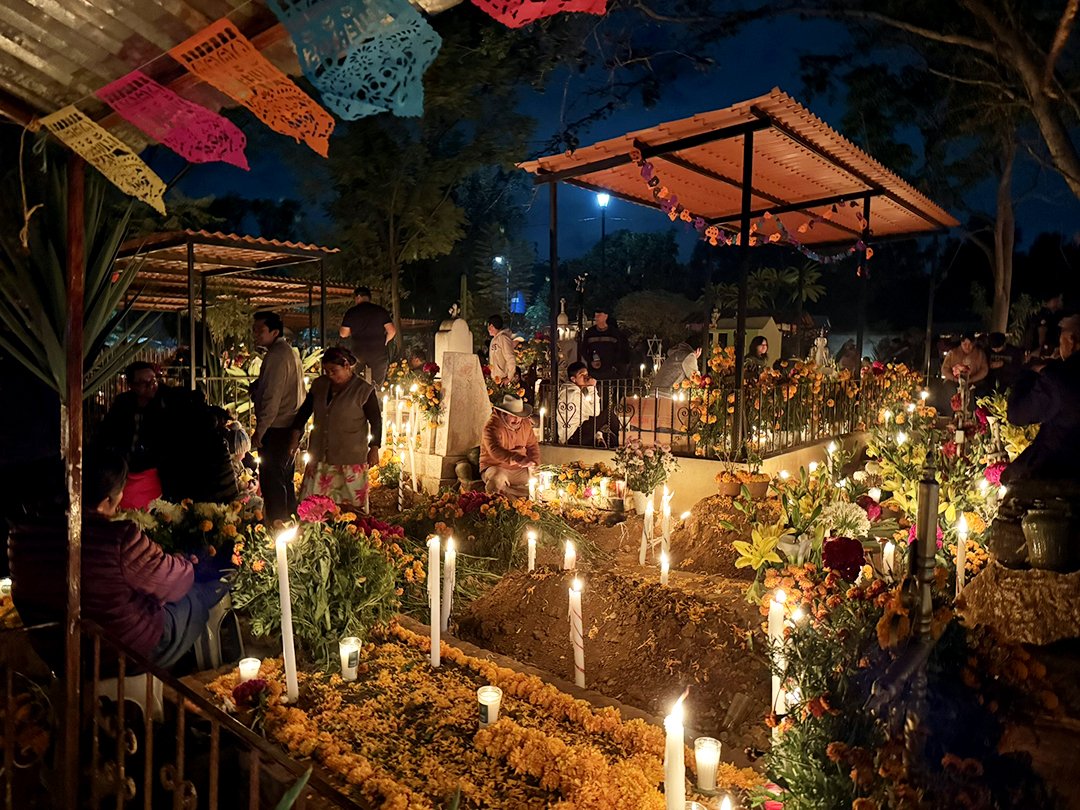
A trip to Oaxaca for its famous Day of the Dead festivities had been on my list for years. I was drawn by the bright orange marigolds, candlelit cemeteries, painted skeletons, and colorful nighttime processions that turn an ordinary street into a dead man’s dance party. Oaxaca delivered all of it. What surprised me was how naturally Día de los Muertos fit into a broader visit to Oaxaca and the surrounding area. I could spend an evening following a brass band through the historic center, then stand among ancient Zapotec ruins the next morning.

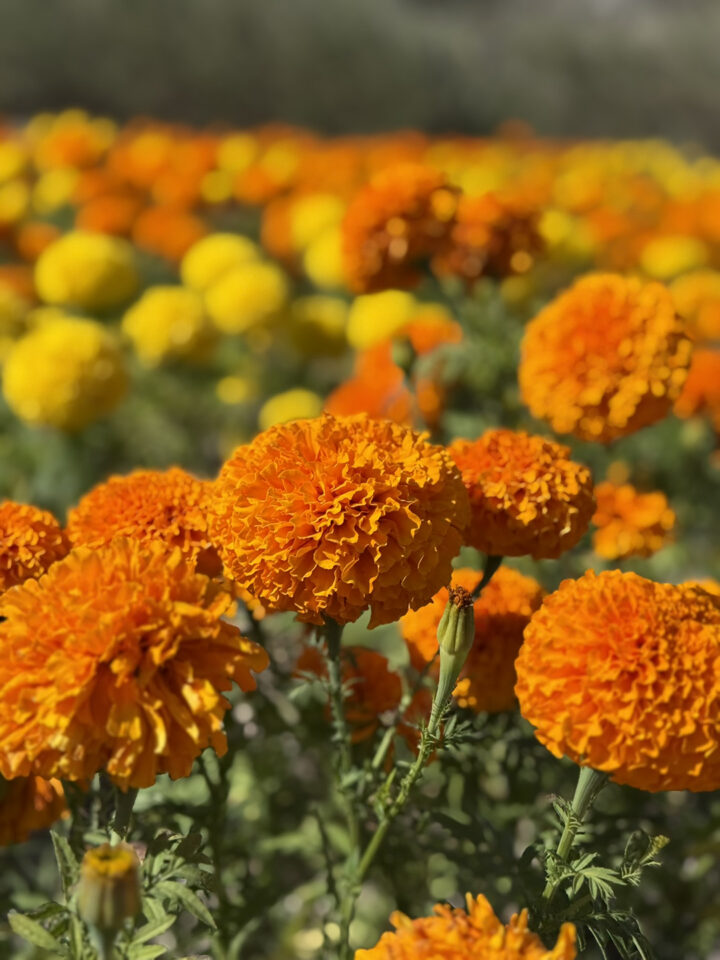
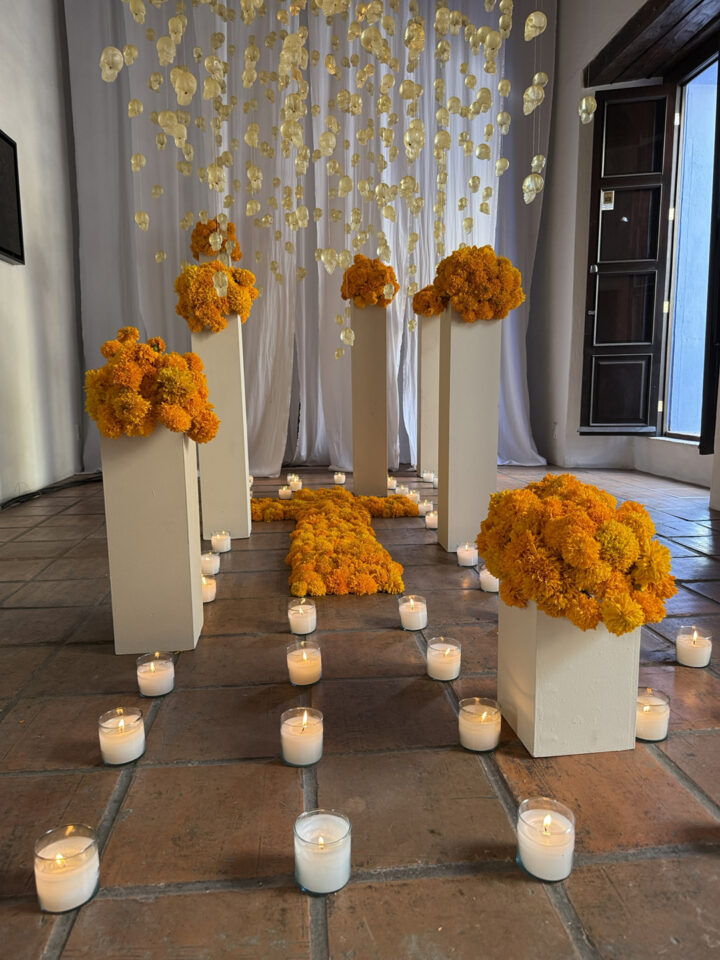
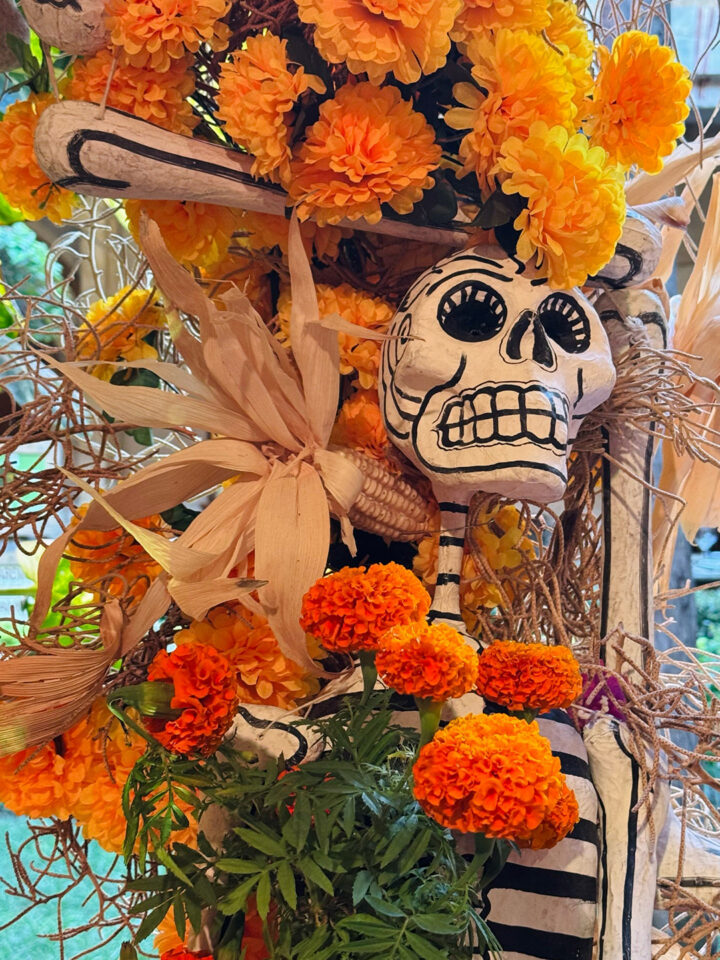



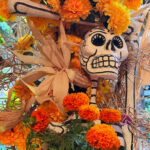
I intentionally planned a visit to Oaxaca City because it is arguably Mexico’s most elaborate display of Día de los Muertos. At the same time, I wanted to dig more deeply into Oaxacan culture, rich with history, art, food, and drink. So, I created an itinerary that offered more of what the whole state of Oaxaca has to offer.







Día de los Muertos Is a Family Affair
In Mexico, the Day of the Dead tradition has been building for nearly 3,000 years, rooted in Indigenous beliefs that the dead remain part of the family story. Over time, those customs evolved into today’s Día de los Muertos celebrations, when families gather to remember loved ones who have passed, build ofrendas (altars) with their favorite foods and personal mementos, and welcome them back into the family for a brief visit on this one day. The mood is joyful, centered on life, family, and remembrance.


On our first evening, my husband and I stepped outside our hotel in Oaxaca’s Centro Histórico and quickly joined a lively procession moving through the streets. Babies rode on shoulders, grandparents kept pace, and smiles were everywhere. Giant skeleton puppets bounced above the crowd while costumed devils beat drums among families and friends in elaborate calavera makeup. Colorful paper flags stretched between decorated buildings, and brass bands kept the crowds high-stepping through the cobblestone streets.
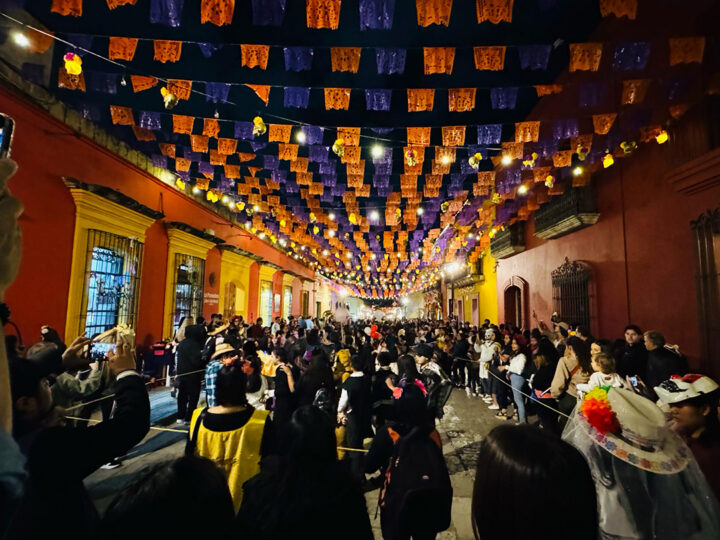
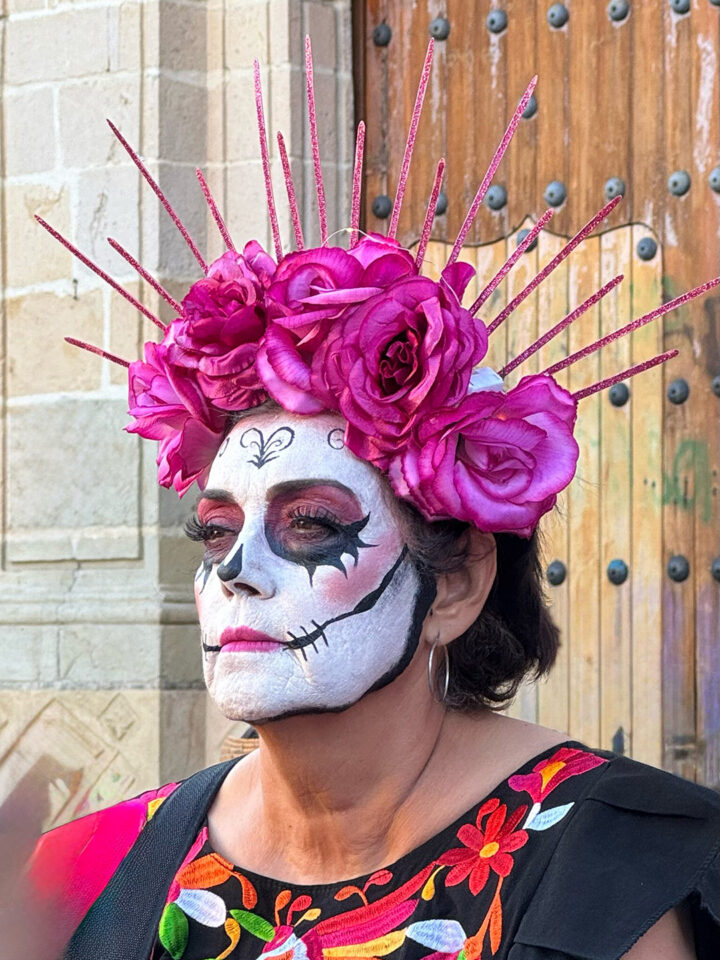
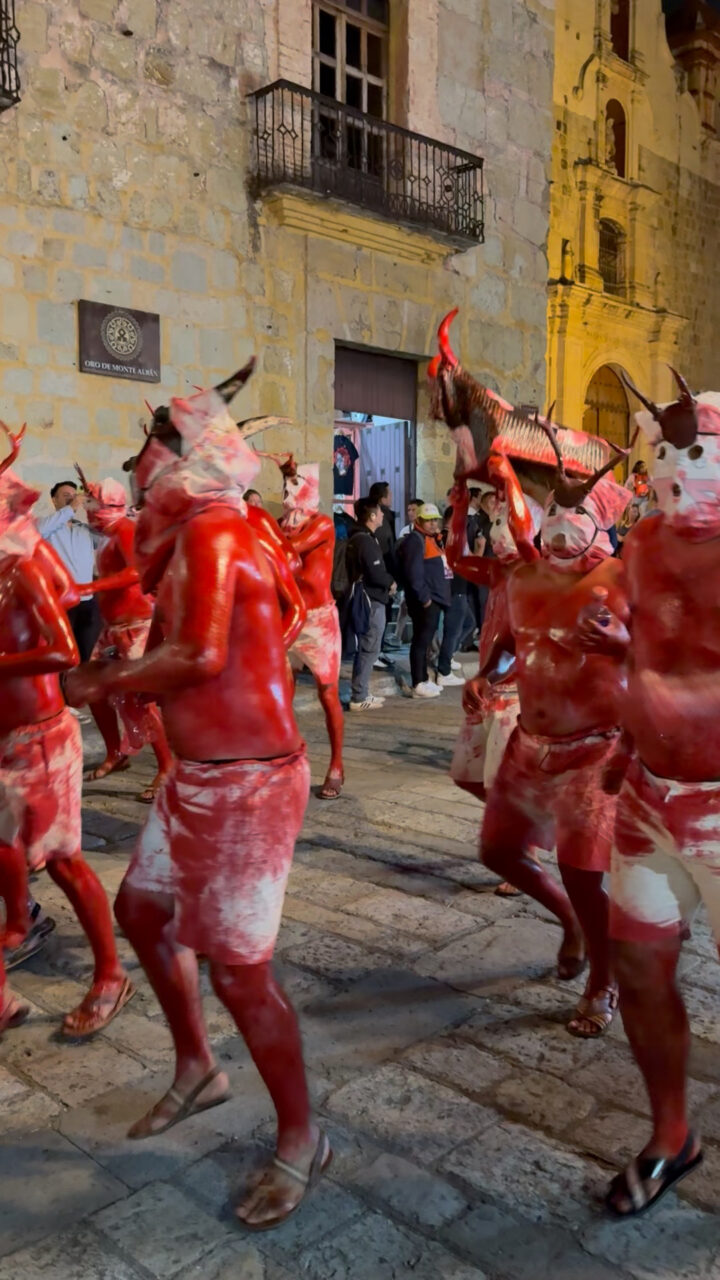
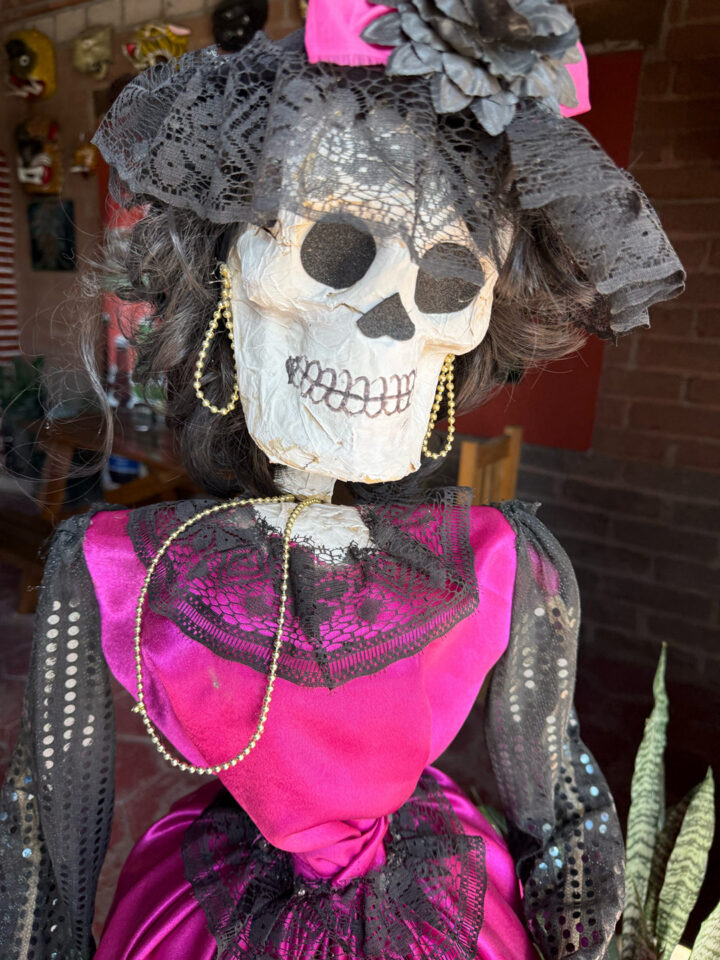

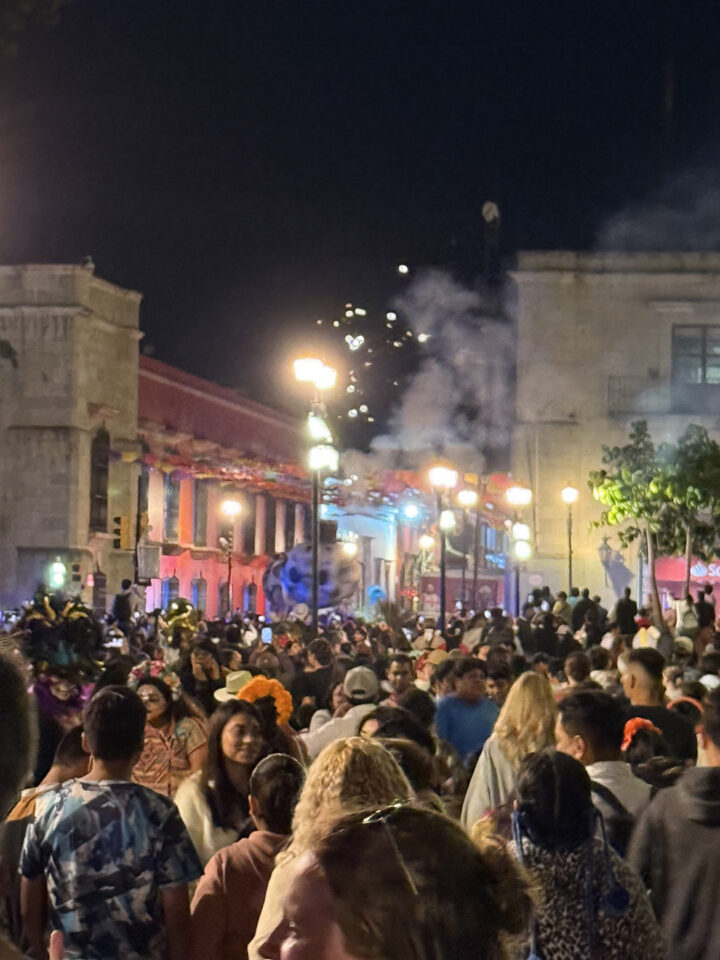
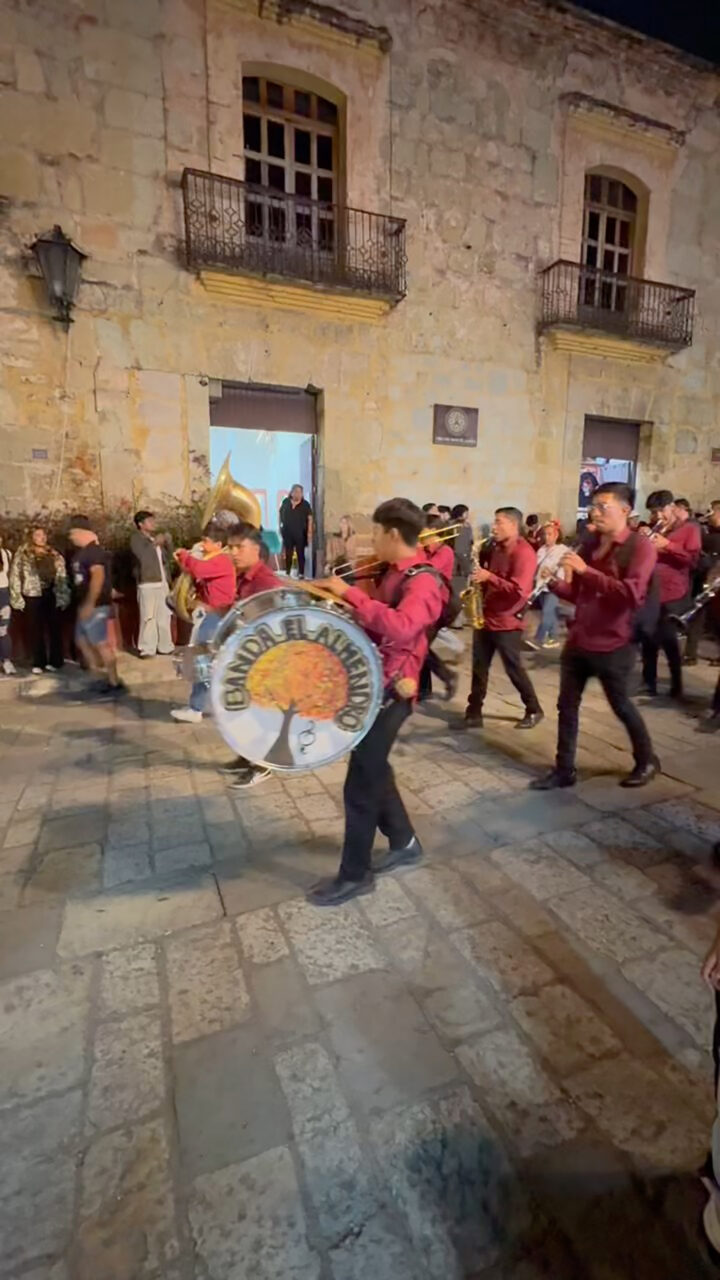


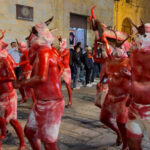



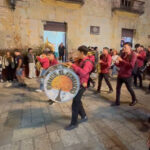
The entire Old City becomes one giant street festival, complete with face-painters, food vendors, artists, musicians, and entertainers of all kinds. The celebrations last for three nights each year, from October 31 to November 2.
Oaxaca Day of the Dead: Beyond the City
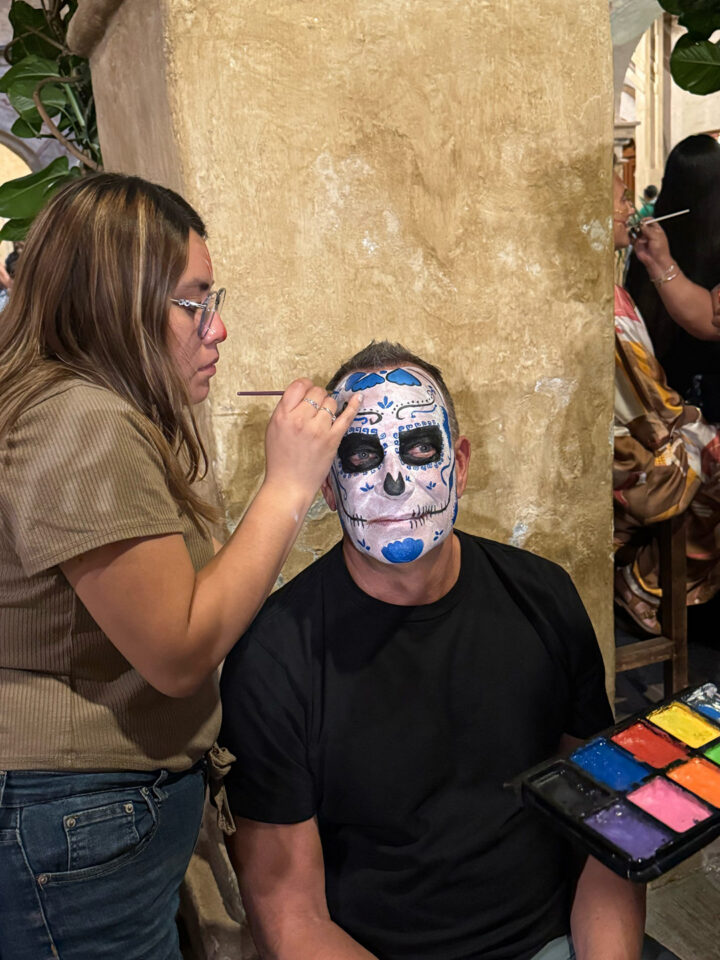
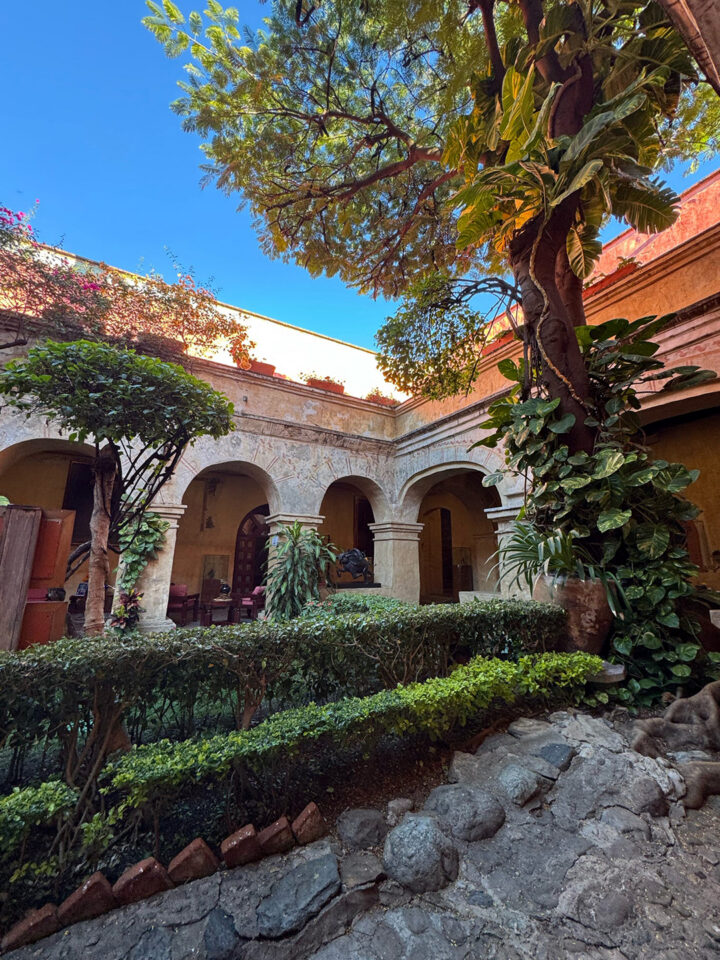
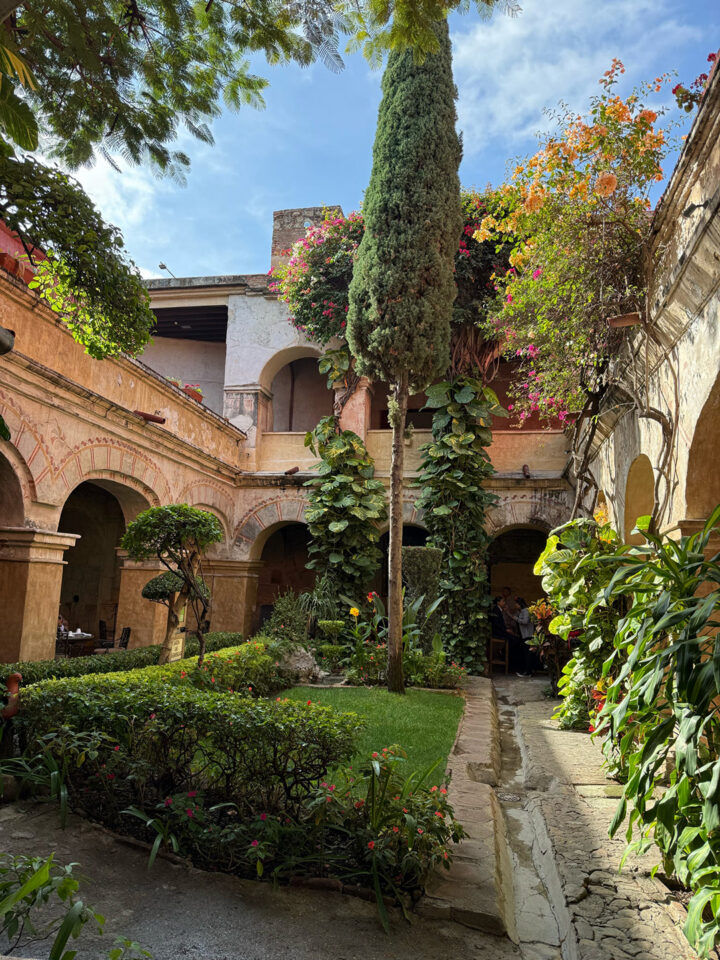
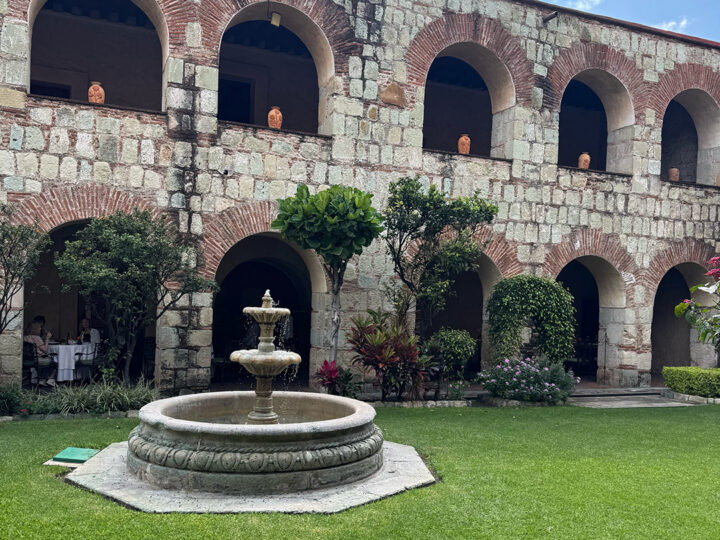
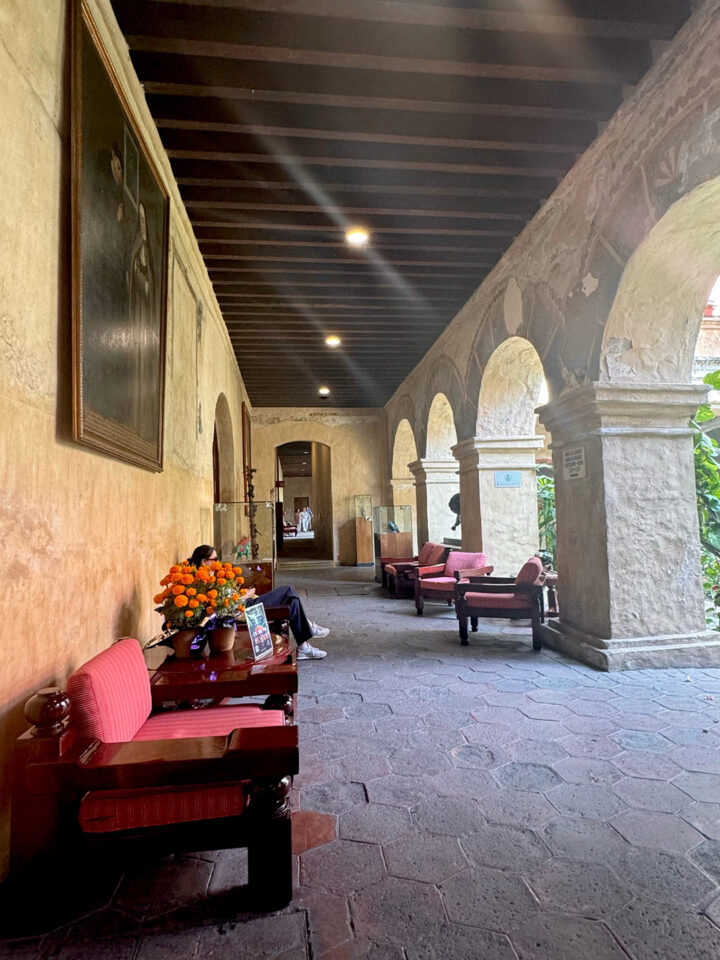
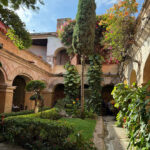
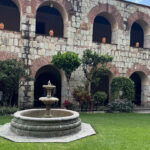
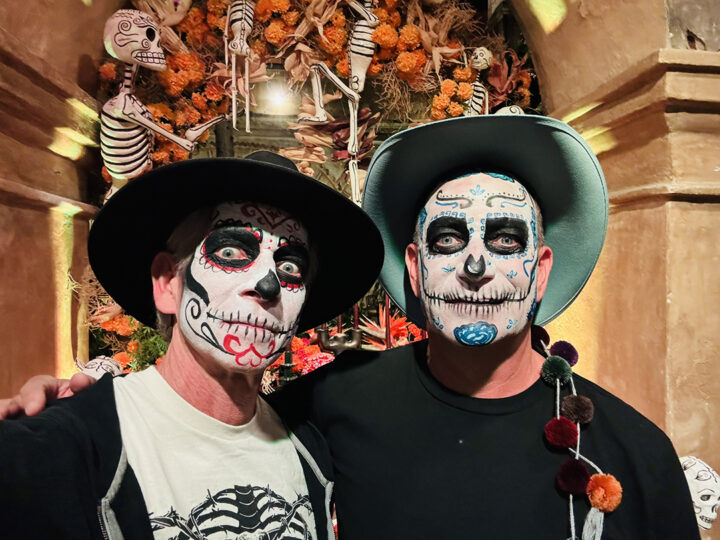
At Hotel Quinta Real Oaxaca, the celebration started before we even left the property. The hotel had face-painters working beneath its old stone arches, and we felt the tug to join in. There is something about having your face painted like a colorful skull that apparently requires you to take an unreasonable number of selfies. I have the evidence.


Graveyard Hopping
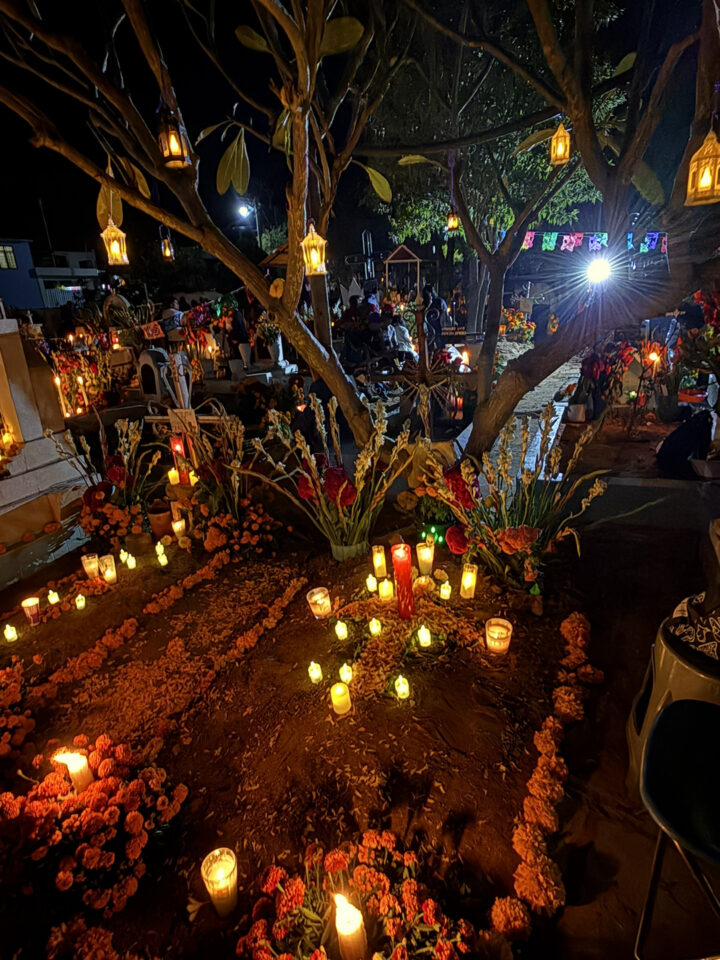
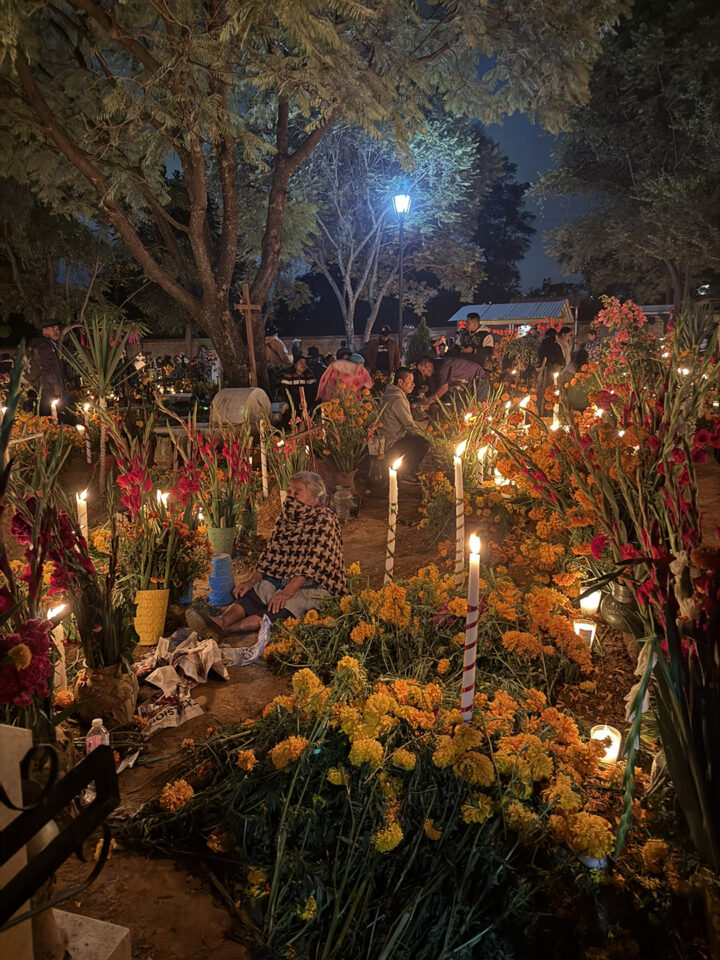
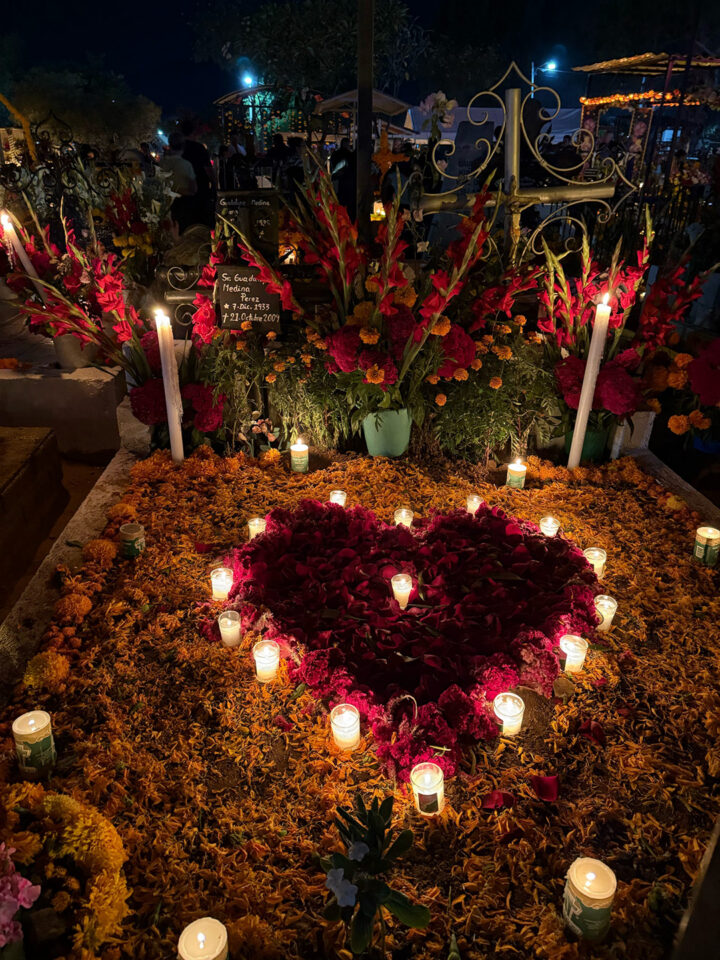
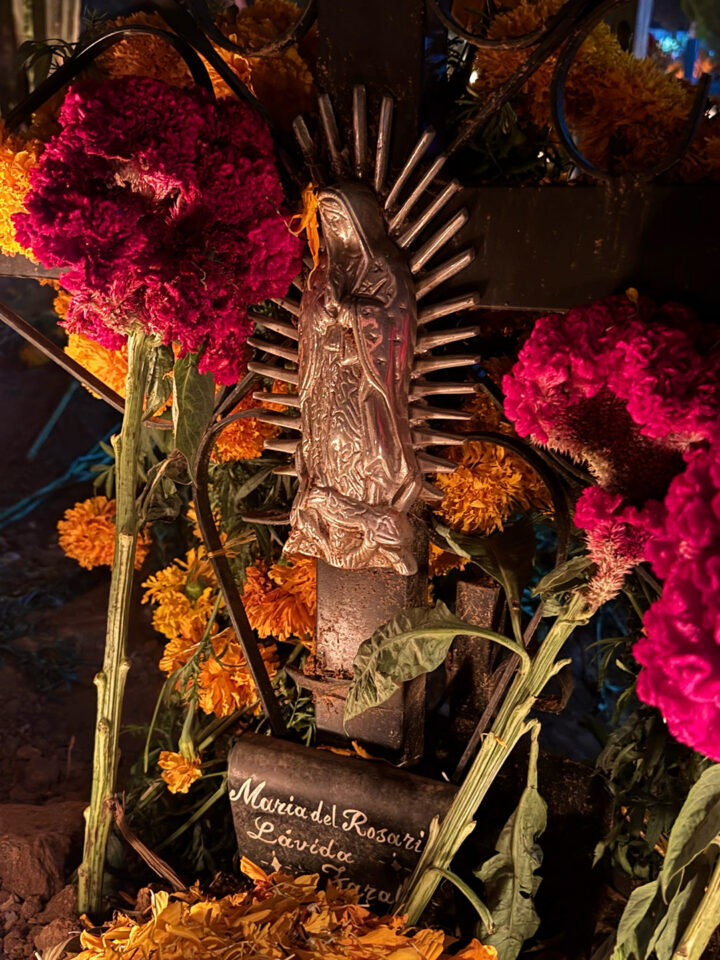
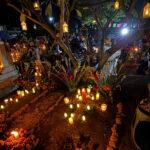
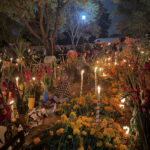
Later that evening, still wearing our calavera-painted faces, we visited two cemeteries outside the city. This was when the meaning behind all the color and celebration came into sharper focus. Graves were elaborately covered with flower petals, candles, framed photos, and personal mementos. Families sat nearby talking and spending time together, listening to music, enjoying treats, and maintaining a connection with relatives who were gone by including them in the festivities.
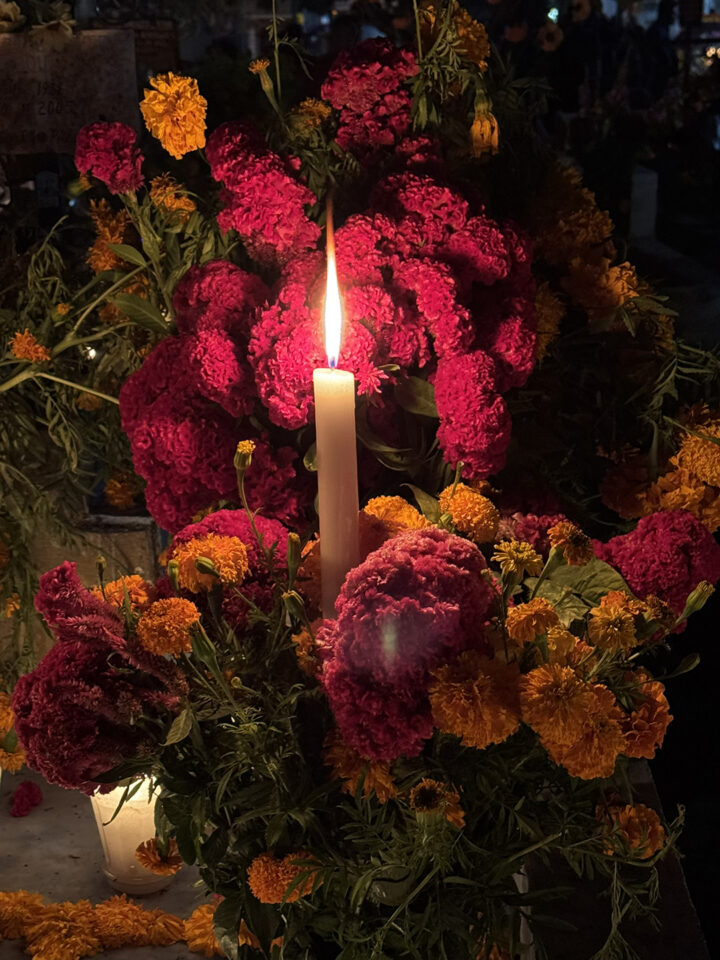
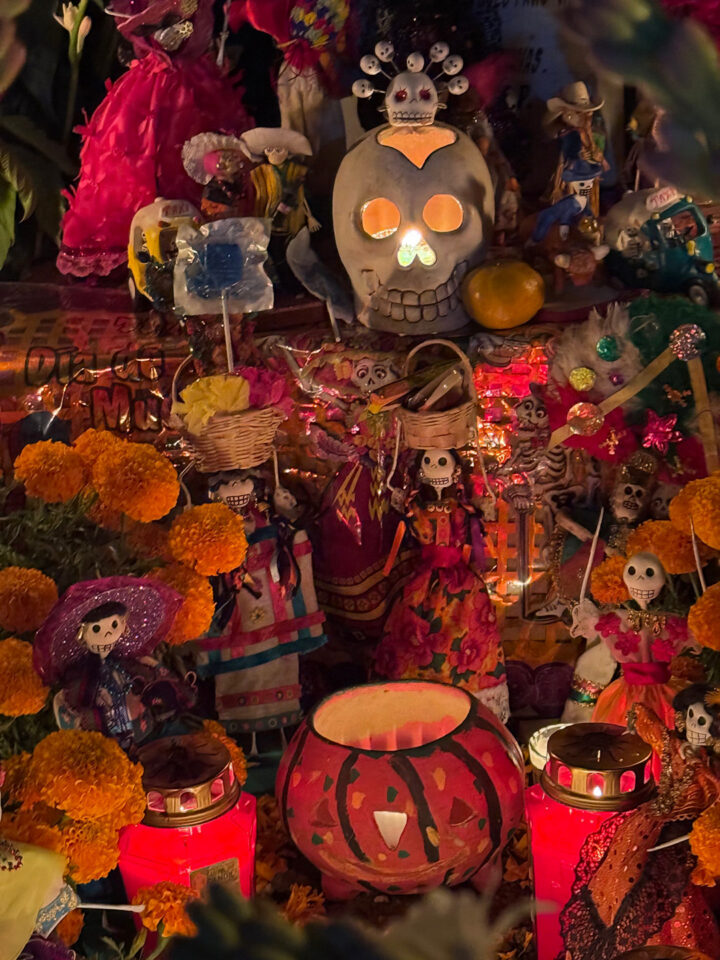
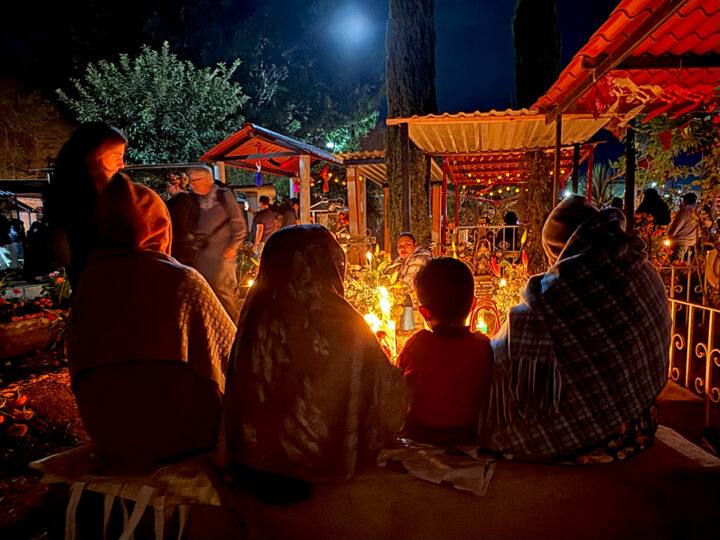
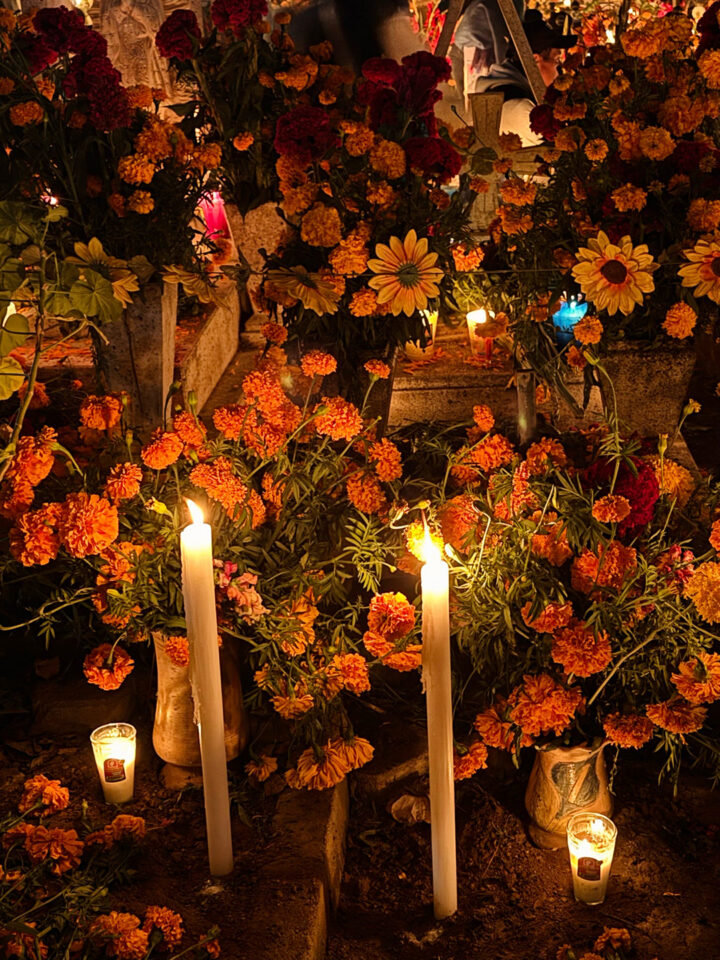



The spaces were filled with celebration and color, and we had never seen a cemetery feel so active and personal. Some graves were simple; others had clearly taken days of work. Visitors are welcome in these spaces, and we relied on smiles, nods, and good manners to keep a respectful distance while snapping a bazillion photos.



Battle of the Bands
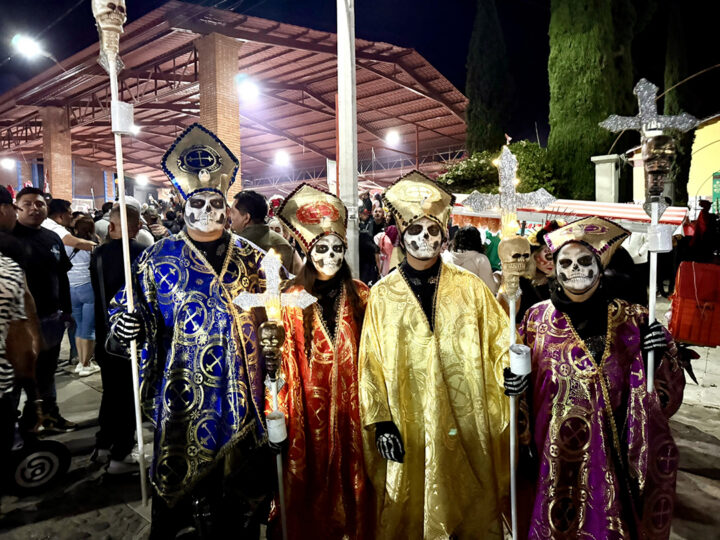
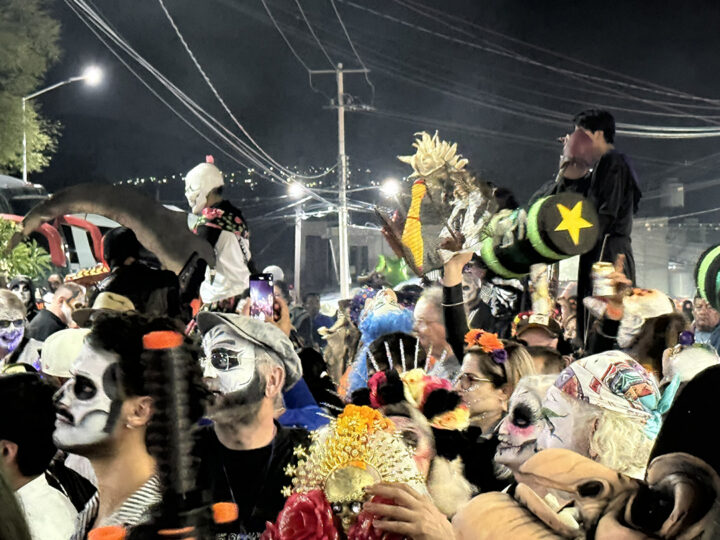
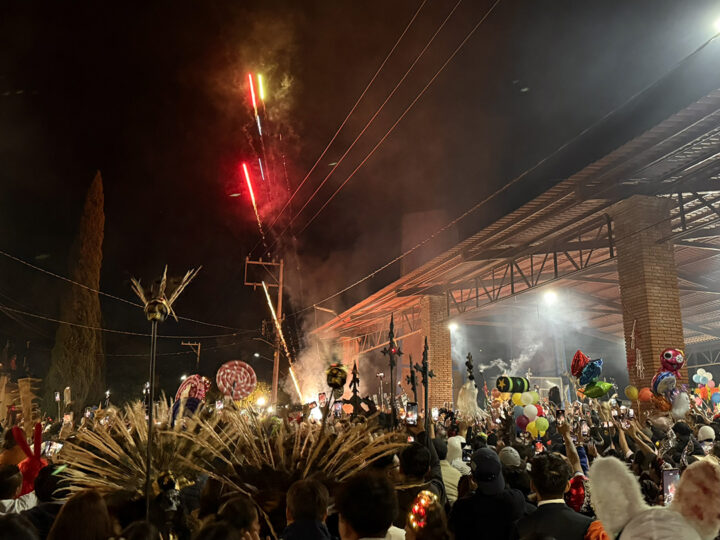
Another night took us to Etla, a tiny village outside Oaxaca, for a local Battle of the Bands (“El Encuentro”), exactly as chaotic as it sounds. Two brass bands marched toward each other from opposite ends of the street, each trying to outplay the other as the costumed crowd got squeezed into the middle. Eventually everyone converged on a central stage, where the bands took turns playing a song or two. The audience decided the winner by sheer volume. The musicians come from nearby villages, and hometown pride rides on every note. It’s crazy good fun — bring your earplugs!



Ancient Ruins and Fanciful Creatures
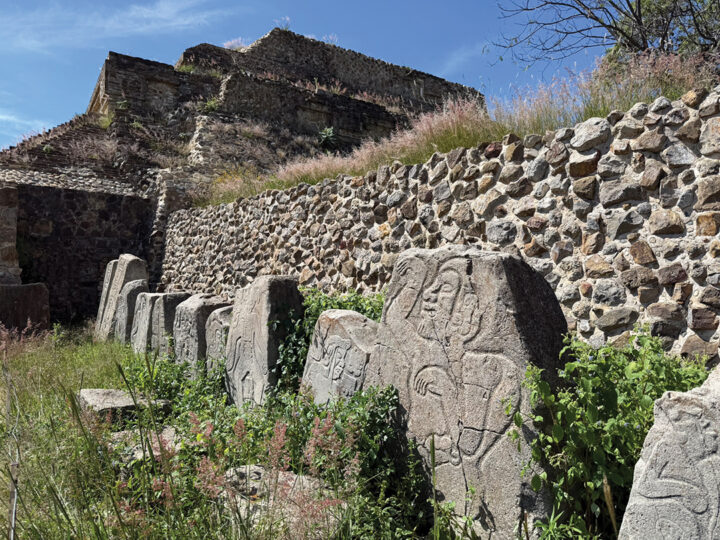
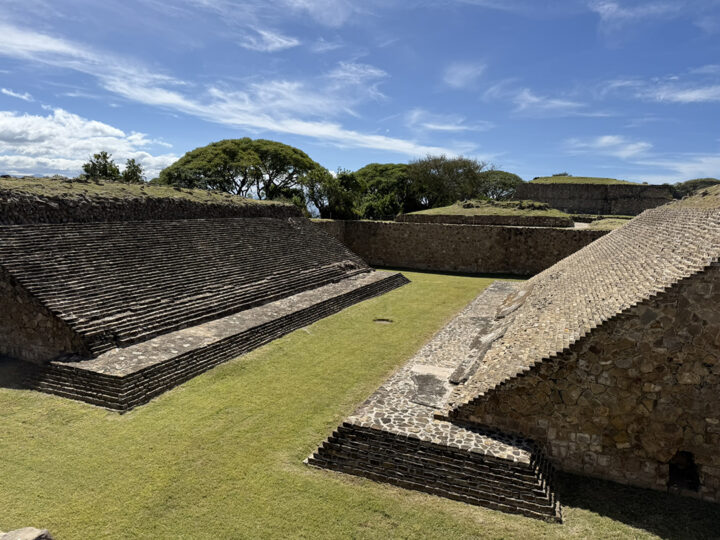
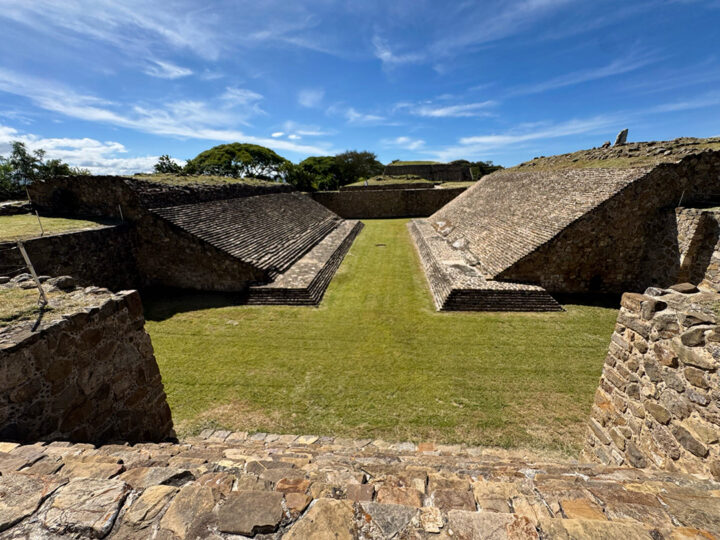
About 45 minutes outside Oaxaca City lies Monte Albán, the ancient Zapotec city spread across a mountaintop overlooking the Oaxaca Valley. Massive plazas and stone platforms open toward mountains in nearly every direction, and our guide gave us context we would have missed on our own. He explained how the city was founded around 500 BCE and what archaeologists learned from its carvings and structures.
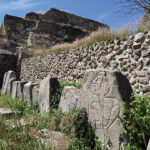
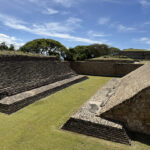
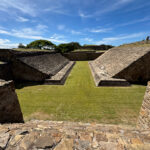
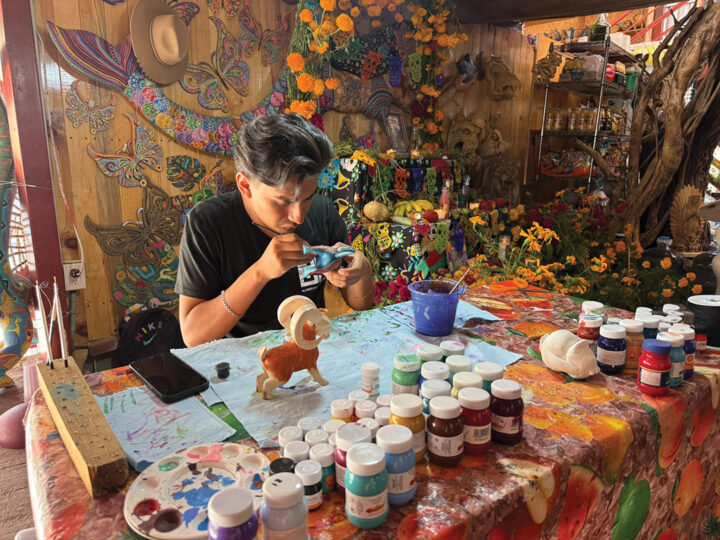
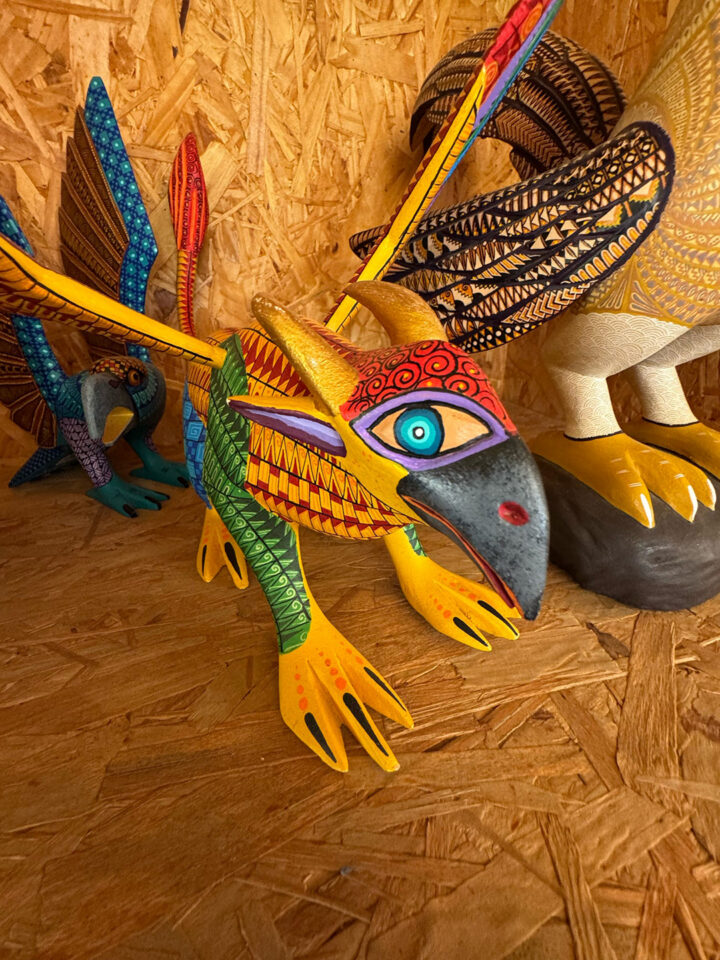
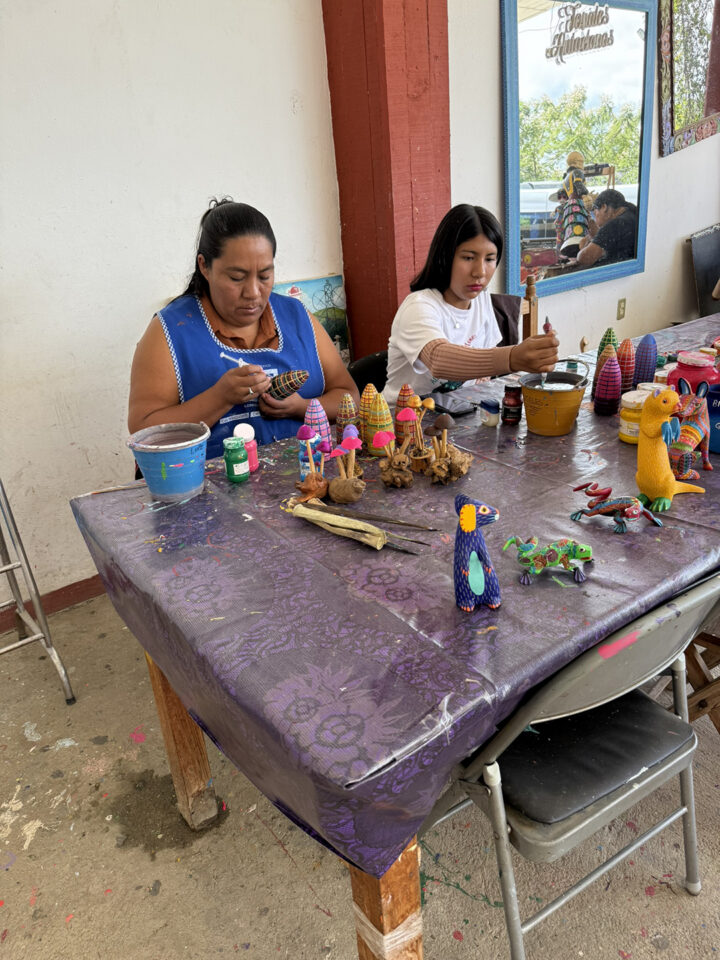
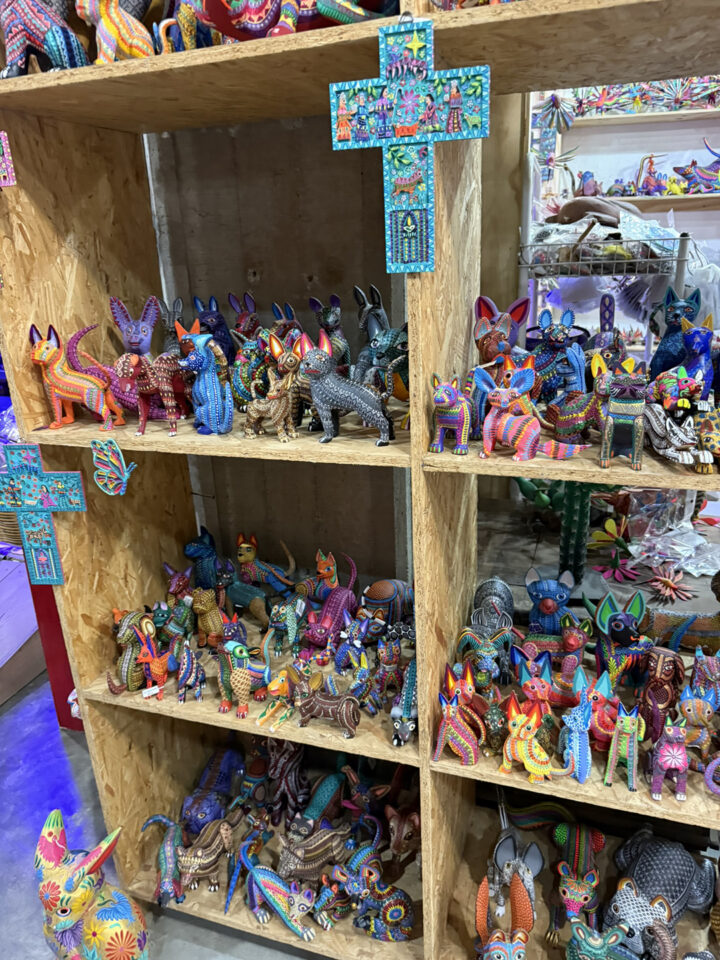
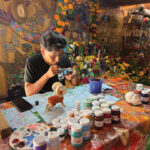
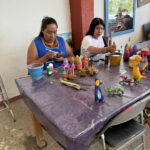
After our architectural fill, we rumbled down a dirt road to the village of San Antonio Arrazola, known for its carved wooden creatures called alebrijes. Fashioned from copal wood, these fanciful pieces are painstakingly hand-painted in dots, lines, and geometric patterns with bright colors. Some resemble hummingbirds and frogs. Others look as if several species were combined after a particularly creative mezcal tasting. We watched artisans carve, paint, and finish each piece from start to finish. Buying one directly from the workshop made a better souvenir, and we saw similar creatures back in town for ten times the price.
Oaxaca’s Famous Cuisine
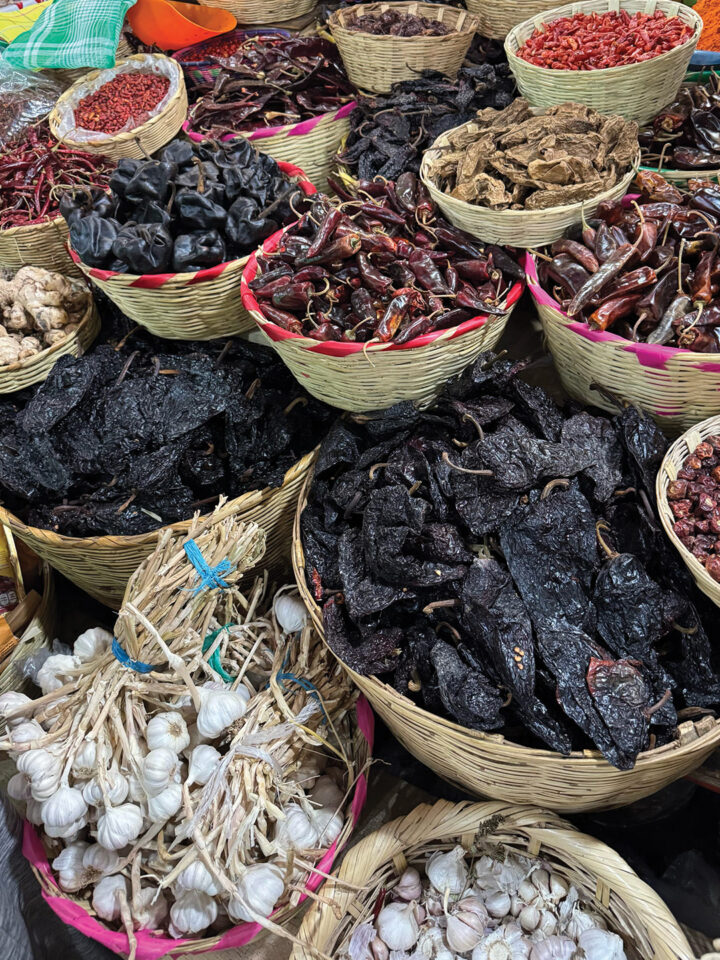
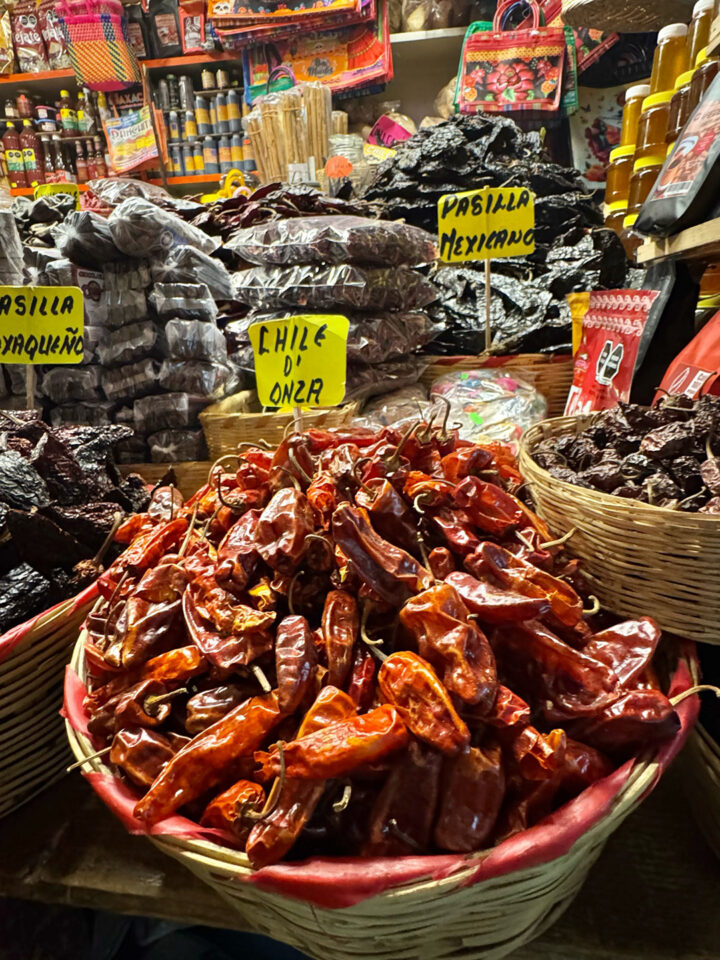
On our last day, we wandered through the adjoining Mercado Benito Juárez and Mercado 20 de Noviembre, two sprawling covered markets near the Zócalo. We stopped at stalls stacked with dried chiles, herbs, seasonal breads, and ingredients we couldn’t always identify. We wandered slowly, sampling as we went.
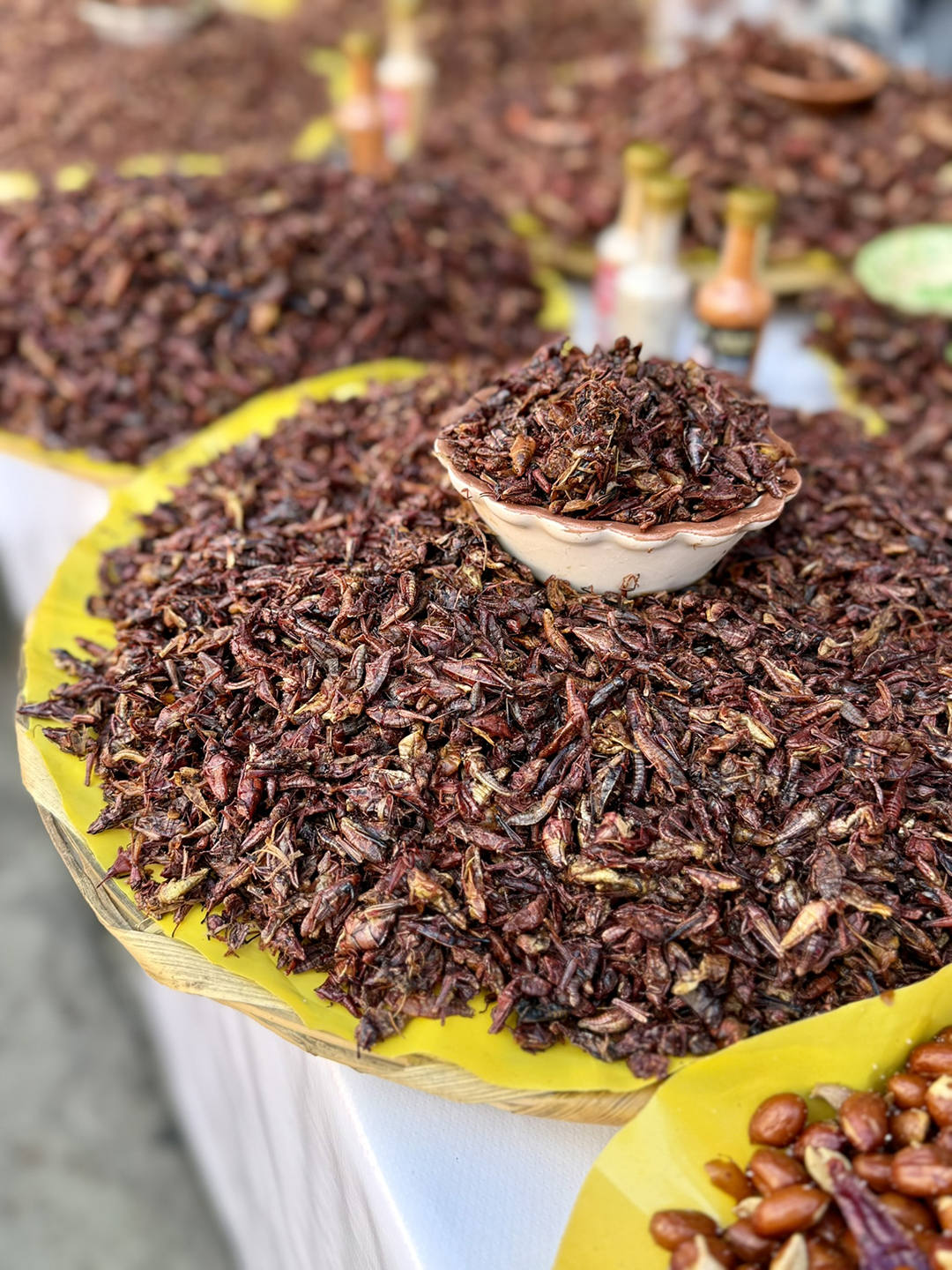
And then there were the chapulines. Oaxaca’s toasted grasshoppers come seasoned in different flavors like garlic, chile, and lime, and tasting them felt obligatory. They were crunchy, salty, and perfectly fine, but none of us returned home with a new grasshopper habit.
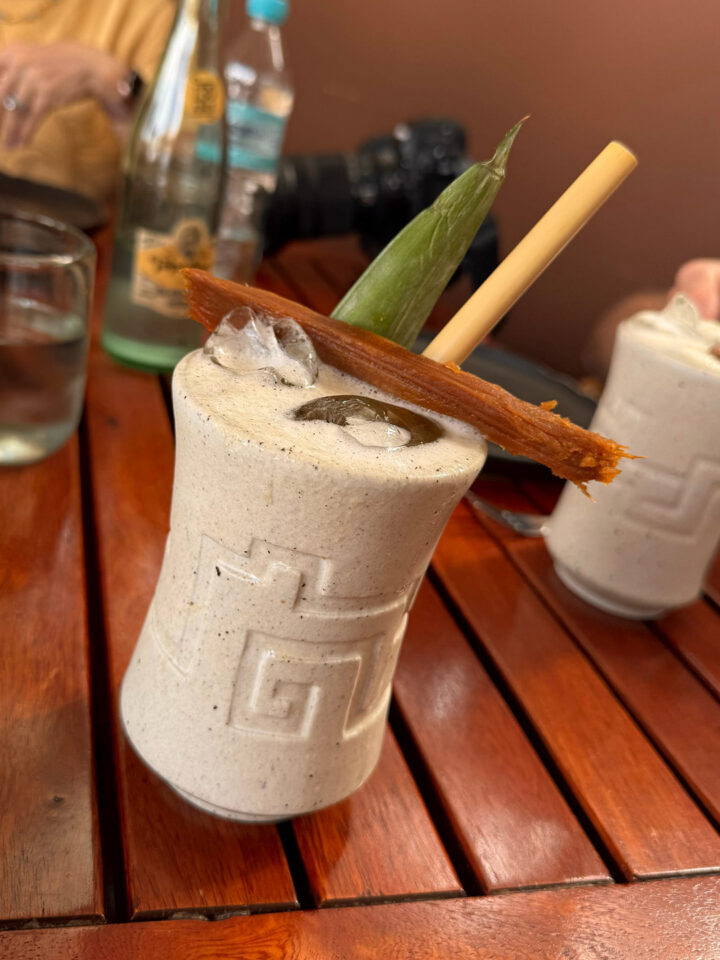
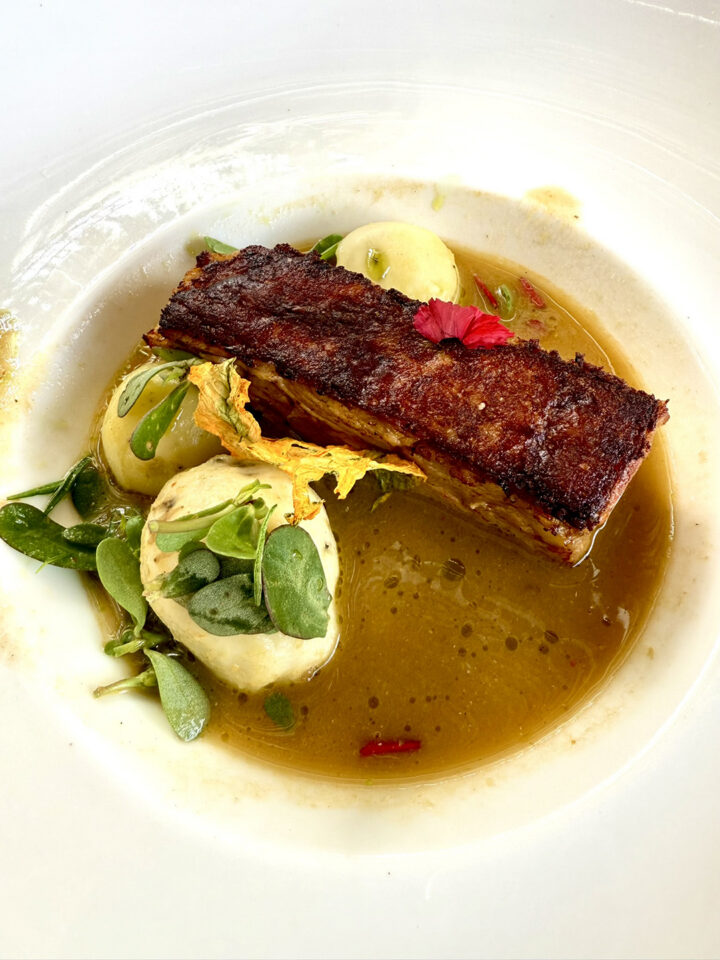
But the specialty here is mole. Oaxaca is one of Mexico’s great centers for it, and eating several versions made me realize how little sense it makes to treat mole as one sauce. It comes in many colors and varieties beyond the sweetish, chocolatey version most common in the U.S. Different combinations of chiles, spices, and other ingredients produce moles that can be smoky, spicy, nutty, or subtly earthy.

Come for the Dead, Stay for the Life
Visit Oaxaca during Día de los Muertos because the celebrations really are as extraordinary as you have heard. Follow a parade for a few blocks. Get your face painted. Visit a cemetery at night. Ask a guide to tour you through the villages outside the city. Then keep exploring.
Día de los Muertos may be what gets you to Oaxaca, but it is everything around the celebration that makes you want to stay.
Jon Bailey is a San Diego-based travel journalist, exploring the globe with his husband and their two daughters. For more adventures, visit 2dadswithbaggage.com
Know Before You Go
• Oaxaca Day of the Dead celebrations span from October 31 to November 2, with the most important dates being November 1 and 2.
• Hotel rooms and flights book out months in advance, so best to plan ahead for 2027.
• Hire local guides to help you navigate the villages outside Oaxaca City. A good guide can handle transportation and, more importantly, explain the traditions and places you are seeing.



Comments