


Exploring the Netherlands in spring: Tulip fields, storybook villages, and canal-lined charm
A colorful road trip through Holland reveals blooming landscapes, historic towns, and the timeless rhythms of Dutch life
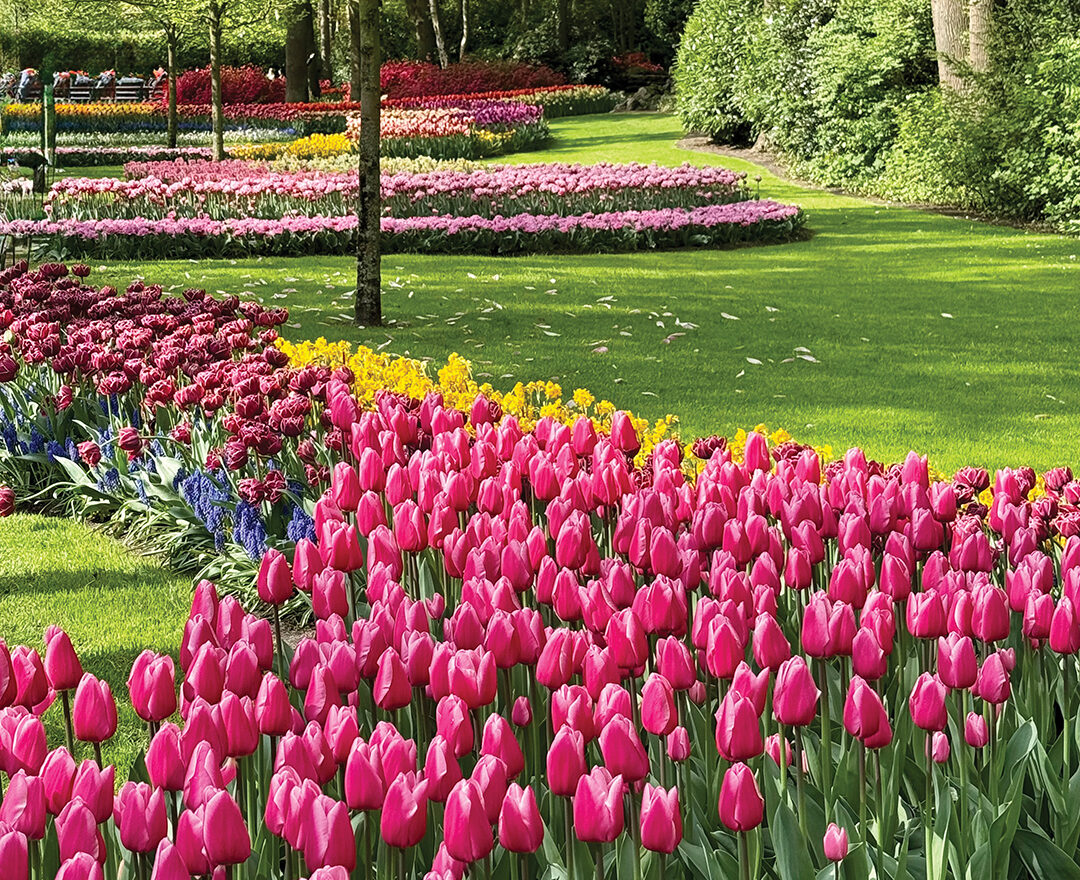
A visit to the Netherlands sounds like a good idea at any time, but in spring this country doubles down on its beauty. The weather turns warmer, the skies more clear and sunny, and the famous tulip fields bloom into rows of endless color that is hard to believe unless seen firsthand. After viewing so many images, videos, and postcards of these gorgeous sights over the years, together with some close friends, I finally checked this trip off the bucket list. Amsterdam and her various charms beckoned, but we prioritized the outlying areas and villages of Holland, where we could immerse ourselves in all things Dutch.
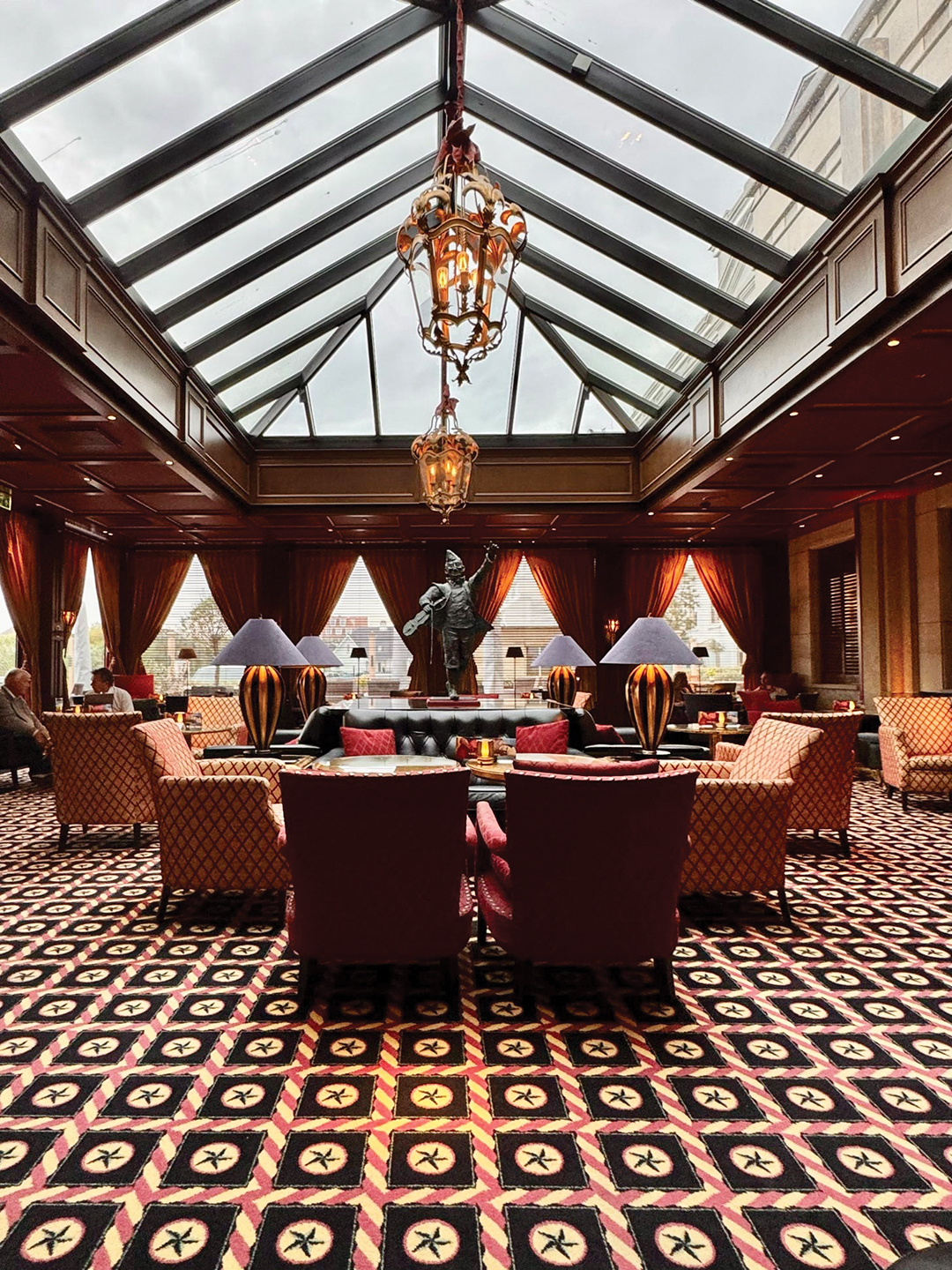
We chose the luxurious and historic Grand Hotel Huis Ter Duin, positioned beachfront in Noordwijk aan Zee, a short distance from the tulip fields, gardens, and waterways that we longed to explore. This hotel has hosted American presidents and European royalty since 1885, rising above the dunes and wide beach with sweeping ocean views. Complete with grand breakfast buffets and a dedicated champagne bar, among other wonderful amenities, it served as a perfect home base for our adventures.
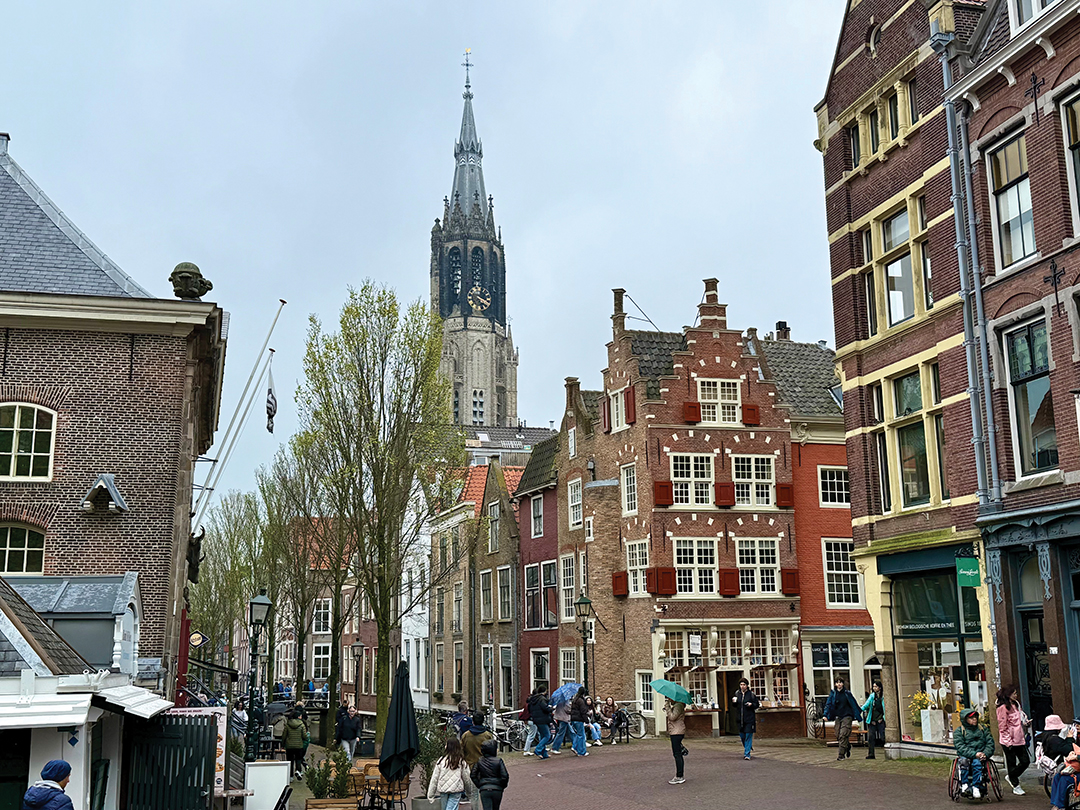
Amsterdam is certainly not the only burg in Holland built along canals, as many would believe. All the smaller hamlets we visited had similar Old City layouts, with that distinctive 17th-century architecture of narrow brick buildings tipping precariously over placid waterways. The charming villages of Delft, Leiden, and Haarlem displayed these famous scenes without the big-city busloads of tourists. It was refreshingly easy to meander through medieval cobblestone streets, bicycles zooming by with their baskets laden with groceries, flowers, and books.
Tulip Fields for Days
Our timing for this trip proved impeccable, as tulip season lasts just a short eight weeks, from late March to mid-May, with April being the sweet spot. Who knew there were so many varieties of what began as a weedy wildflower before cultivation? Its bulbs nearly toppled the Dutch economy in 1637, when they were traded speculatively as valuable currency, like some sort of medieval bitcoin. Now, tulips have become a universal favorite, a symbol of springtime with thousands of varieties.
Feeling adventurous, we booked a private guided tulip bicycle tour in the little town of Lisse, winding through backroads and miles of farmland dedicated to this colorful crop. We hopped on fat, comfy bike seats and happily pedaled along flat roads, with multiple varieties of tulips blooming on either side.
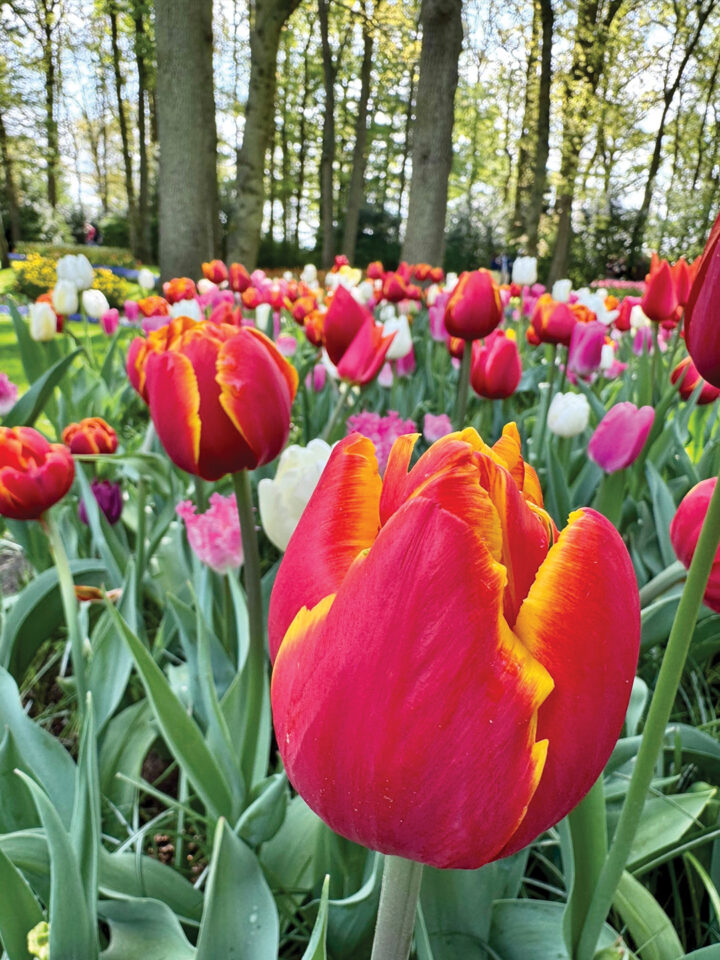
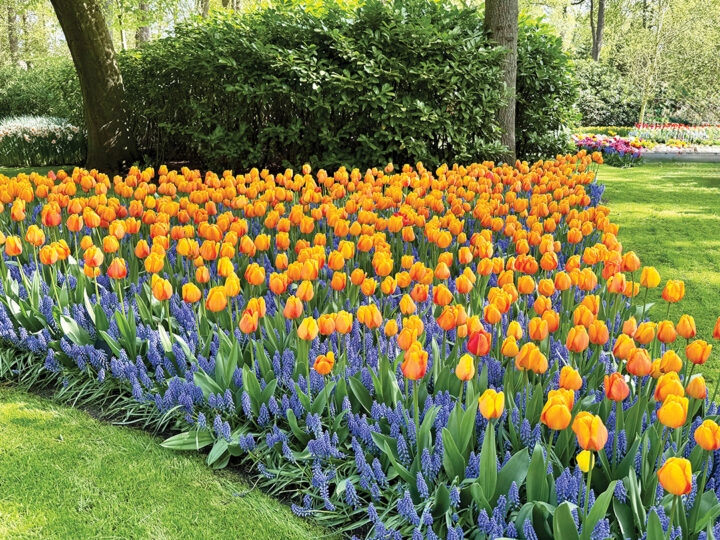
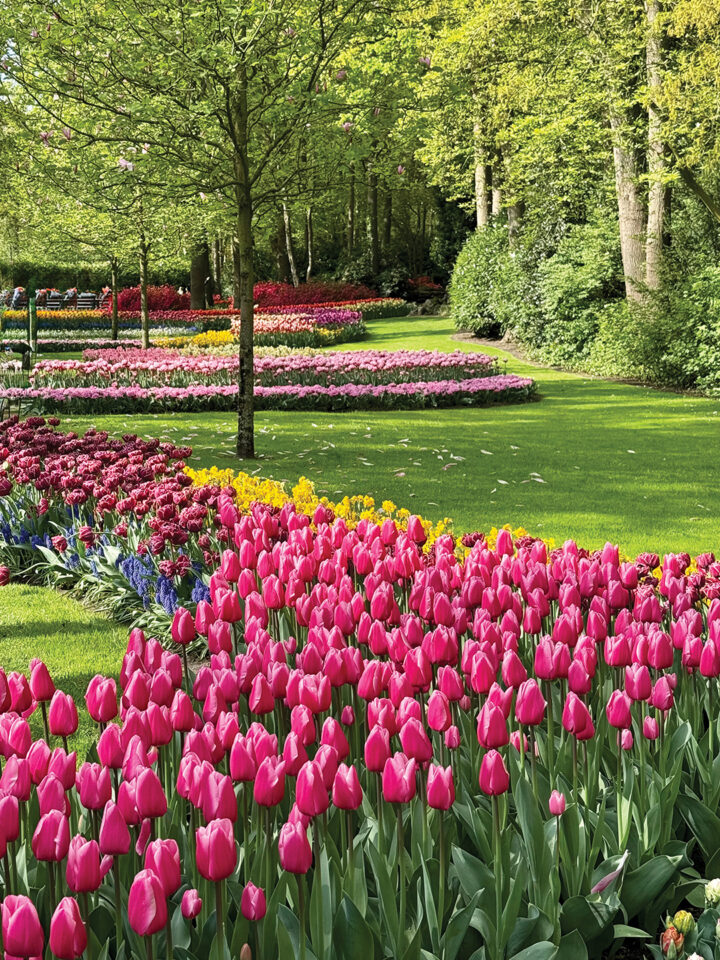
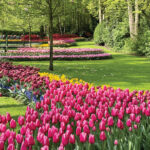
Nearby at Keukenhof Gardens, we got up close and personal with more than 4,000 blooming tulips in all their resplendent glory. Every color of the rainbow waved lazily in the warm sun as we strolled by, planted by a team of some 40 tenders who keep this 80-acre park setting fresh for its visiting hoards. Triumph tulips are the sturdy flowers we most often see in our home arrangements, but here they are commoners. Of the more than 7 million bulbs planted here each year in landscaped groupings, standout varieties included the startling beauty of fringed-top pink ladies, the variegated petals of tulips in many colors, flamed and feathered varieties of Rembrandt tulips, ruffled and flamboyantly orange Parrot tulips, and so many more.
Delft — Home of the Famous Blue Pottery
Considered one of the most beautiful cities in the Netherlands, Delft is a concentration of all the charms we envisioned witnessing in this part of the world. Here the picturesque canals and tree-lined paths are even more quaint, cleaner, and less crowded than Amsterdam, and only 30ish minutes from our hotel.
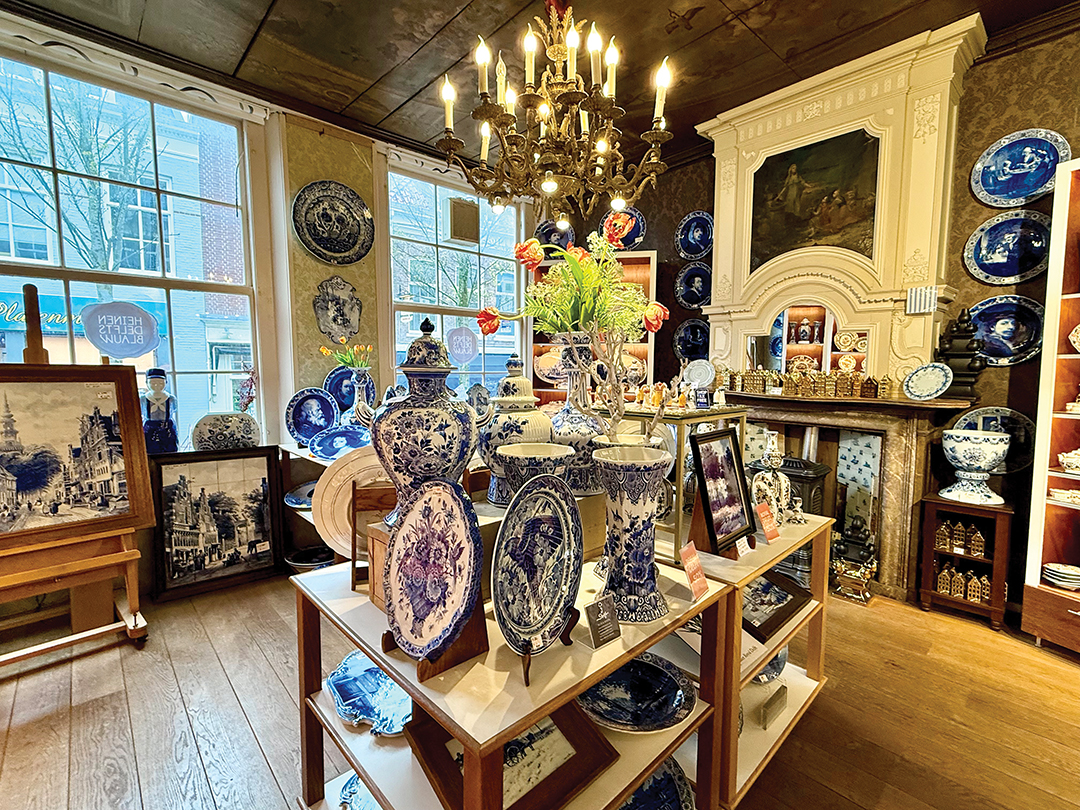
As birthplace of Johannes Vermeer of Girl with a Pearl Earring fame, Delft felt like the perfect backdrop for masterpieces and modern selfies alike. And yes, it’s possible to purchase authentic Delft Blue pottery all over the Netherlands, but somehow it just feels right to consider it here at its birthplace. There is even a Royal Delft Museum dedicated to the craft, which we chose to bypass, drawn instead to a street market filled with delicious cheeses, baked goods, fresh berries, and of course tulips. One friend scored a bundle of 100 peach tulips for just 15 euros while another downed whole pickled herrings, held by the tail and dangled over an open mouth like the locals.
Leiden — Canals, Curiosity, and Quiet
Leiden felt like a city that rewards those who slow down. Smaller and less polished than its sister hamlets, it portrayed a centuries-old confidence that put us instantly at ease. We followed canals curving gently through neighborhoods, bikes leaning casually against railings and window boxes spilling over with flowers.
As the birthplace of Rembrandt, Leiden wears its artistic pedigree proudly. A university town, the city possesses an intellectual pulse, scattered with bookshops, cafés, and museums tucked into charming spaces. In the afternoon sun, we spent hours wandering into hidden courtyards we’d have missed if we weren’t paying close attention. Some revealed architectural wonders, some colorful street art, while others opened into interior gardens filled with greenery and solitude. Ready for a caffeinated sit, we followed our noses to a canal-side café where locals and visitors contemplated how little life here seemed to have changed over the centuries.
Haarlem – Yes, That’s Where the Name Came From
Haarlem, the Netherlands, and Harlem, New York, are directly connected through colonial history. Harlem in New York City was originally founded by Dutch colonists in 1658 and named “Nieuw Haarlem” after their prosperous hometown. In modern times, Haarlem feels like a historic city beckoning for exploration.
The primary reason we targeted Haarlem is the spectacularly well-preserved Molen de Adriaan windmill rising high above the River Spaarne. Constructed in 1779 atop an ancient stone defense tower, the wooden windmill suffered a fire and was rebuilt to original specifications. We were pleased to see the windmill blades still turning as they did centuries ago.
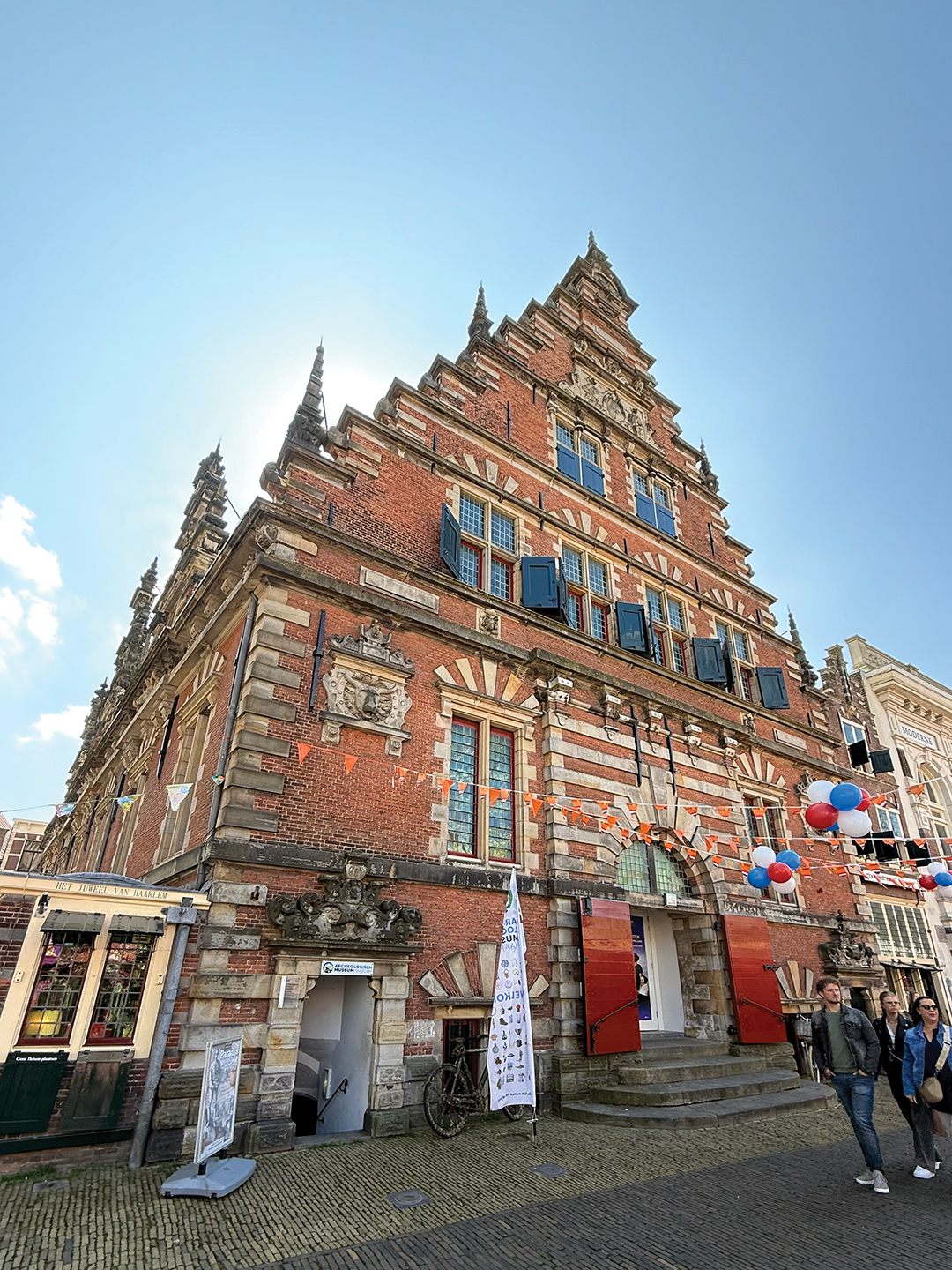
As the day unfolded, we ducked in and out of boutiques and shops filled with independent designers, fashionable eyeglasses, and the best European thrifting we’ve ever experienced. Front and center sits Grote Markt, serving as both social heart and navigational anchor. This bustling city square is framed by the stately presence of St. Bavo Church and a steady rhythm of local life. From here, we easily flowed between cultural touchstones like the Frans Hals Museum and more indulgent pursuits like bakeries perfuming the air and abundant outdoor beer cafes, umbrellas tilting toward the sun.
Getting There
San Diego enjoys a direct flight to Amsterdam via KLM Airlines, and Schiphol Airport is a delight of organization and design. Out in no time, we braved a rental car which proved quite easy to navigate the 40 minutes to our hotel. From this basecamp, other destinations were less than a 30-minute drive along country roads and green pastures. Tulip fields were just ten minutes by car.
A Brief Note About Holland vs. The Netherlands
Maybe I was alone in my ignorance, but I learned that Holland comprises two regions of the Netherlands that encompass the western part of the country where we ventured. The two names are not interchangeable. “Dutch” references the people, culture, and language of this gorgeous country. Luckily for us, everyone spoke perfect English in even the smallest hamlets and were so kind and welcoming.
Jon Bailey is a San Diego-based travel journalist, exploring the globe with his husband and their two daughters. For more adventures, visit 2dadswithbaggage.com




Comments