
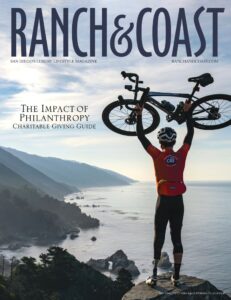

How five San Diego nonprofits in our philanthropic community are changing lives every day
How local organizations are meeting critical needs and transforming lives across San Diego
In the years that I’ve had the privilege of writing about San Diego’s philanthropic community, I can say definitively that this much is true: Show me a need, and I’ll show you an organization here that’s working tirelessly to address it. It’s become a beloved opportunity we look forward to all year long to share some of these incredible organizations in our pages during this season of giving. While each is unique in its inspiration, mission, and execution, all share a common thread — a tireless commitment to making the world a better place.
Challenged Athletes Foundation
“Stuff happens when you do the right thing and you do it from your heart.”
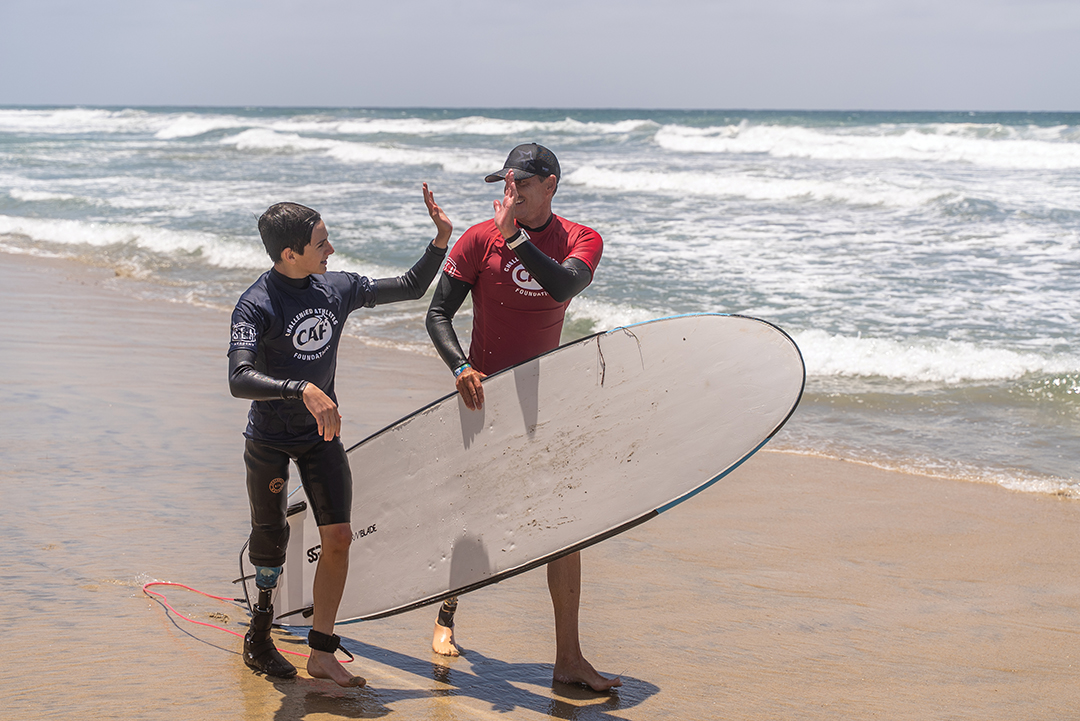
Think about the lengths you’d go to in order to help a friend who’s experienced unimaginable, extraordinary challenges. Now, multiply that by 30 years, $191 million, and countless people inspired by your mission, and you have Challenged Athletes Foundation (CAF).
When Bob Babbitt’s friend Jim MacLaren lost his leg in a traffic accident, and then, unthinkably, MacLaren survived a second accident that left him a quadriplegic, Babbitt and two friends, Jeffrey Essakow and Rick Kozlowski, came together to raise enough money to purchase MacLaren a specialized van. All competitive athletes, the men held a triathlon in San Diego in 1994, made well beyond their goal, and their eyes were opened to another issue facing people with physical disabilities. “We got Jimmy the van,” remembers Babbitt, but after learning that insurance companies didn’t cover any specialized equipment needed for people to engage in athletics, they broadened the scope of what they wanted to accomplish for people like their friend, a former Ivy League football player and elite endurance athlete for whom sport was an essential part of being alive. From there, says Babbitt, “Our goal was to make sure [that] if someone needed a piece of equipment or training or travel to stay in the game of life through sport, CAF would be there.”
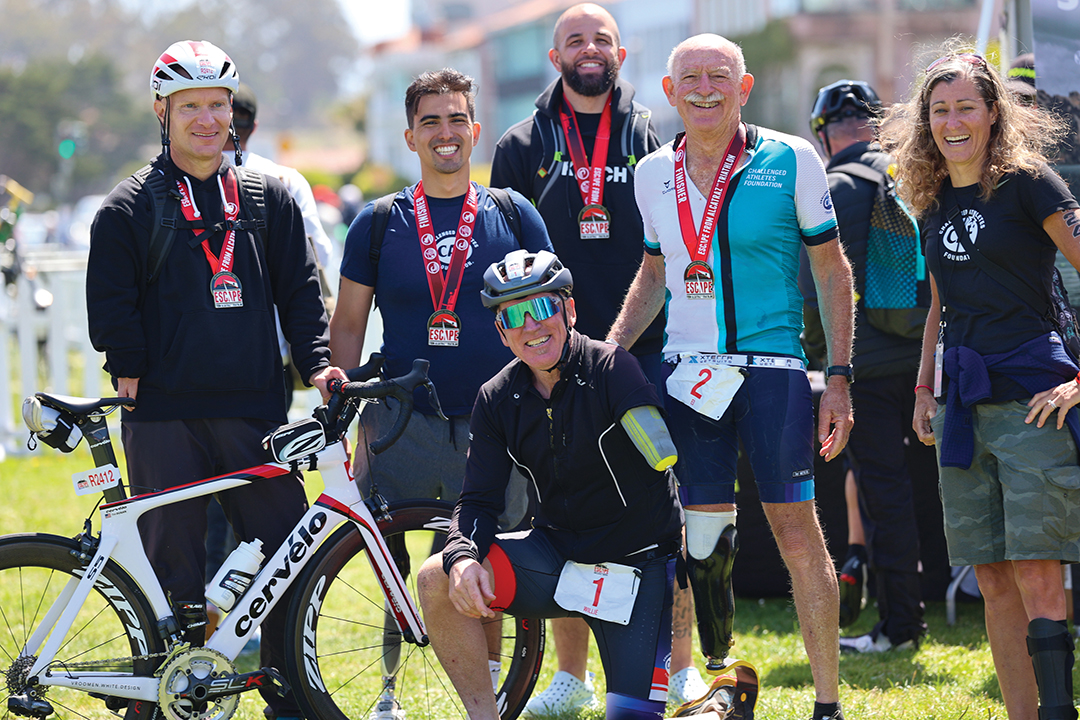
The word — and the work — of CAF resonated worldwide, reaching a young man in Ghana born missing a tibia, a birth defect that would’ve normally doomed him to death or banishment according to his country’s custom. Instead, determination and his mother’s love drove that man, Emmanuel Ofosu Yeboah, to seek acceptance and prove his ability. He requested a grant of a bike from CAF, which he received and rode across Ghana 600 kilometers for ten days. Together, Yeboah and MacLaren were honored with the Arthur Ashe Courage Award at the 2005 ESPN ESPY Awards, and Yeboah’s experience was made into a film, Emmanuel’s Gift, narrated by Oprah Winfrey.
“I think the awareness of athletes with disabilities is way more than it’s ever been before,” says Babbitt. Now, he adds, “There are sports for people who have all sorts of different disabilities that didn’t exist before. And I think a ton of that is the awareness that CAF has created.”
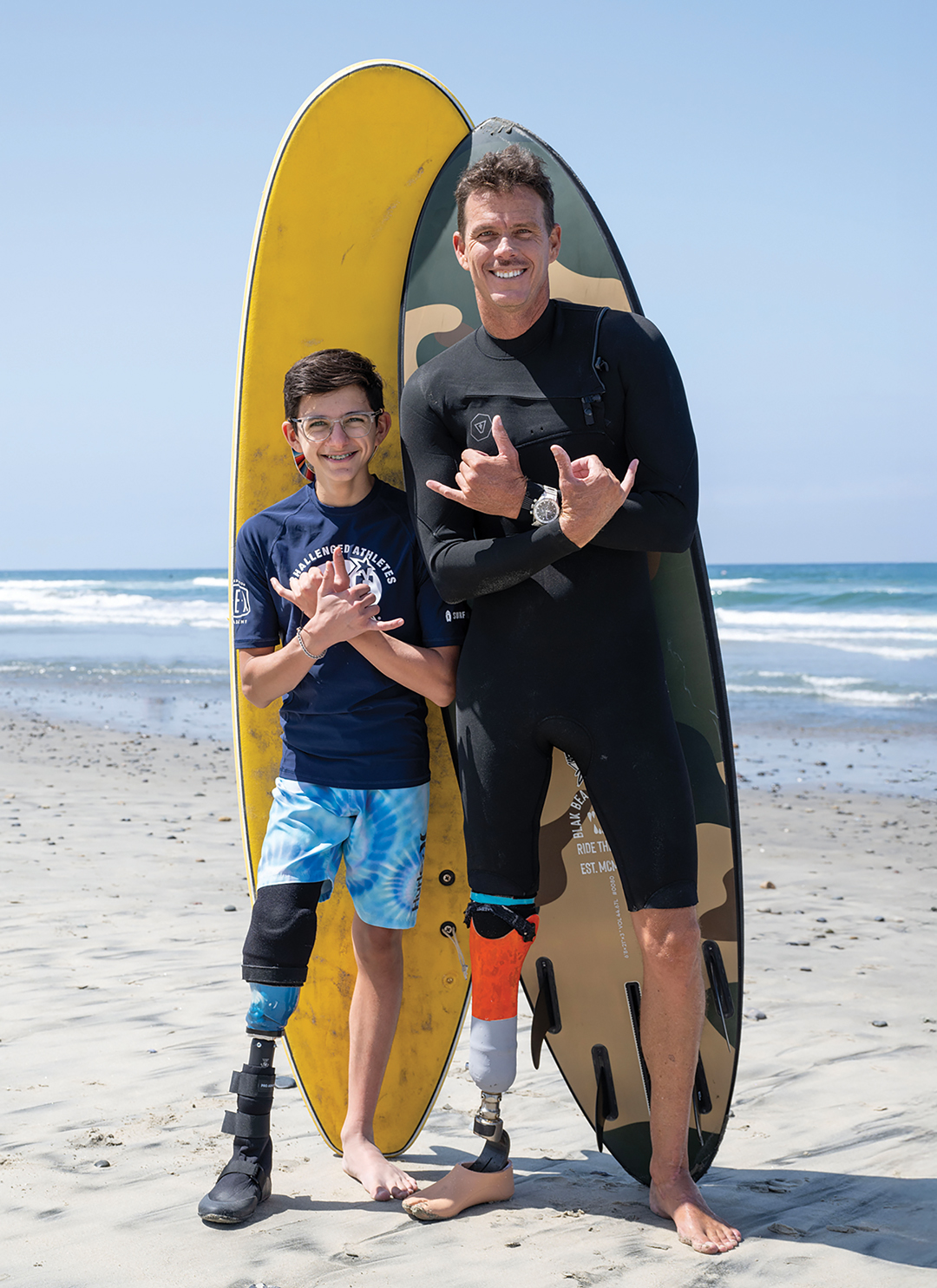
Babbitt explains that this specialized equipment not only supports an individual’s health through physical activity, but it impacts mental health and supports families by enabling them to share experiences that might not otherwise be possible. “You just see kids being well-rounded [with] sport being a part of their life,” says Babbitt, “and adults as well.” He credits CAF’s Operation Rebound, a program created to support veterans, active military, and first responders, with providing a means for families to engage in activities together rather than being separated by a disability.
“Imagine the family where Dad comes back [from military service] paralyzed from an IED,” says Babbitt. “He comes back, and the family is going for a bike ride, but Dad doesn’t have a hand cycle, so he doesn’t go. Or, they have a hand cycle that they got from CAF, and the whole family goes [together]. That works a lot better, right?”
CAF’s signature annual event, the Million Dollar Challenge, engages athletes of all abilities to cycle down the California coast. The 2025 ride, a 640-mile trek from Santa Rosa to San Diego, raised more than $1.6 million this past October. “I think we had 22 Challenged Athletes on the ride, so they get to see the mission up close and personal,” says Babbitt. “In terms of the donors, they get to ride next to [a rider using] a hand-cycle going up Big Sur or a visually impaired athlete on the back of a tandem. It changes your life.”
Babbitt says that more than half of the Paralympians in 2024 had received grants from CAF, so naturally, he’s already eagerly looking forward to the 2028 Paralympics in Los Angeles. On February 7, 2026, CAF will host its first fundraiser in L.A., the Defying Limits Gala, to introduce CAF athletes and honor their achievements.
Regardless of whether someone is an elite athlete or simply a kid who wants to engage in typical childhood activities, says Babbitt, “There’s nothing holding people back and accomplishing whatever they want with a little bit of help and support from Challenged Athletes Foundation.” challengedathletes.org
Changing Tides Foundation
“When women come together and support one another, they can change the world.”
Founded in 2016, Changing Tides Foundation grew from a shared mission among a group of women surfers to provide support and mentorship for girls in underserved communities through a connection with the ocean. In its nascency, the organization offered its signature program, Women’s Outreach Mentorship Program (WOMP), internationally, partnering with local organizations to provide mentorship to teen girls abroad. Since 2022, Changing Tides Foundation’s work has shifted primarily to where its roots are — in San Diego, hosting WOMP for girls and teens including students at The Monarch School, a K-12 school in Barrio Logan for unhoused youth.
“The program is comprised of land-based learning and education,” explains Carolyn Saunders, Changing Tides Foundation’s executive director. “The girls learn about critical women’s health issues through guest speakers, and they learn about protecting their local ecology and their local environment through recycling and plastic reduction practices. Then, they’re paired one-to-one with an experienced female surfer who helps guide the girls into the water and helps them catch their very first wave.”
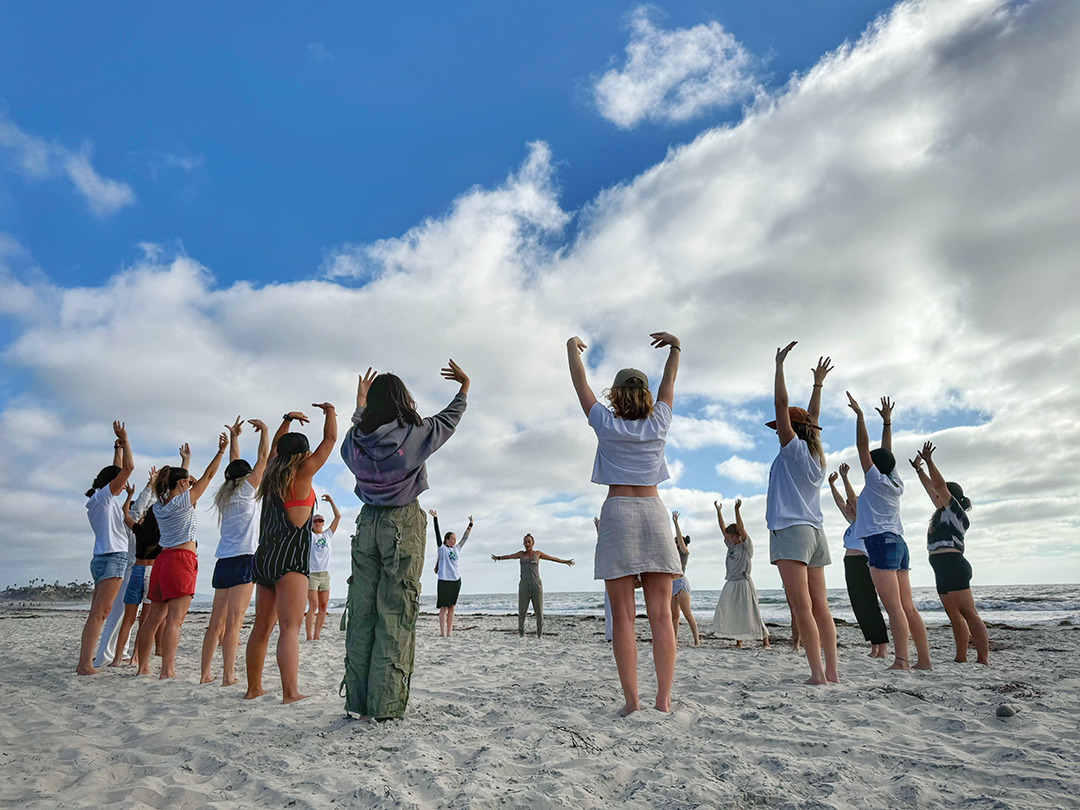
All of the educational components are presented by experts — always women — in their respective fields, from women’s health professionals to marine biologists, environmental experts, scientists, and professors. The surfing mentors undergo a rigorous training process before coming in to take the girls into the water.
“Working with populations like Monarch School and other communities that don’t necessarily have regular access to the ocean, the girls that we work with are oftentimes quite fearful in the beginning, and some of them have never stepped foot in the ocean,” says Saunders. “So it’s really this process over the course of several weeks of developing trust — the girls develop trust in their mentor. They sometimes start out by just walking into the ocean up to their knees on the first week, and then by the end of the multiple-week programs that we run, some of the girls who were the most fearful in the beginning are the ones that are catching the most waves.”
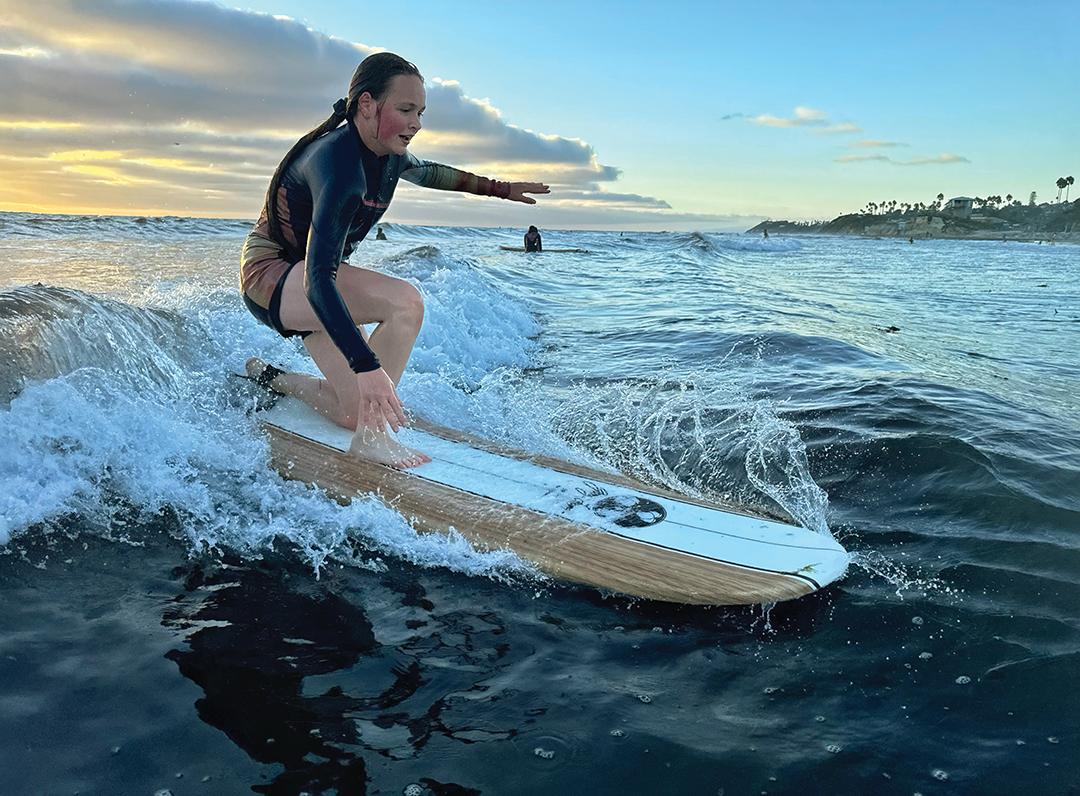
Through their work with girls from San Diego’s marginalized communities, Saunders says they’ve learned that swimming ability goes down in these populations, which has helped the organization to identify new opportunities to reach girls where they are, beyond the beach. “We feel that our program is so holistic, between the land-based components as well as the skill and confidence building components combined with mentorship, that we are actually going to be launching a skateboarding arm of our program so that we can work with girls from inland communities and meet them in their community,” she says. Of course, this pivot also creates a new need within the organization: providing transportation for the girls to get to where the programs are held. Saunders says this is a primary goal for fundraising as Changing Tides Foundation looks to scale throughout San Diego County in 2026.
“I think what makes Changing Tides Foundation so special to me is that we are a community of women who support women and believe in the power of the ocean, mentorship, and community to realize young women’s full potential and to help lift them up and empower them,” says Saunders. “It’s really incredible to see this transformation, just this absolute blossoming of confidence and sense of community, that they develop.” changingtidesfoundation.org
California Wolf Center
“Everything gets a little bit more balanced when you allow your wildlife to be there.”
For many of us living in San Diego County, the mountain hamlet of Julian is synonymous with many things, from apple pie and autumn pumpkin patches to snowy scenes when winter temps dip, but critically endangered wolves may not be top of mind. Their plight, however, has been the focus of California Wolf Center since 1977, when it was originally founded with two North American gray wolves in its care.
In 1997, the center joined efforts to save the Mexican gray wolf from extinction, when only a handful of these animals existed in the wild that were deemed genetically diversified enough to start a breeding program. Over the course of decades, adjustments to the strategy to breed and reestablish the wild population as well as retain genetic diversity in well-managed captive breeding programs throughout the U.S. have led to counts approaching 300 in the wild, with more than 300 still in captivity.
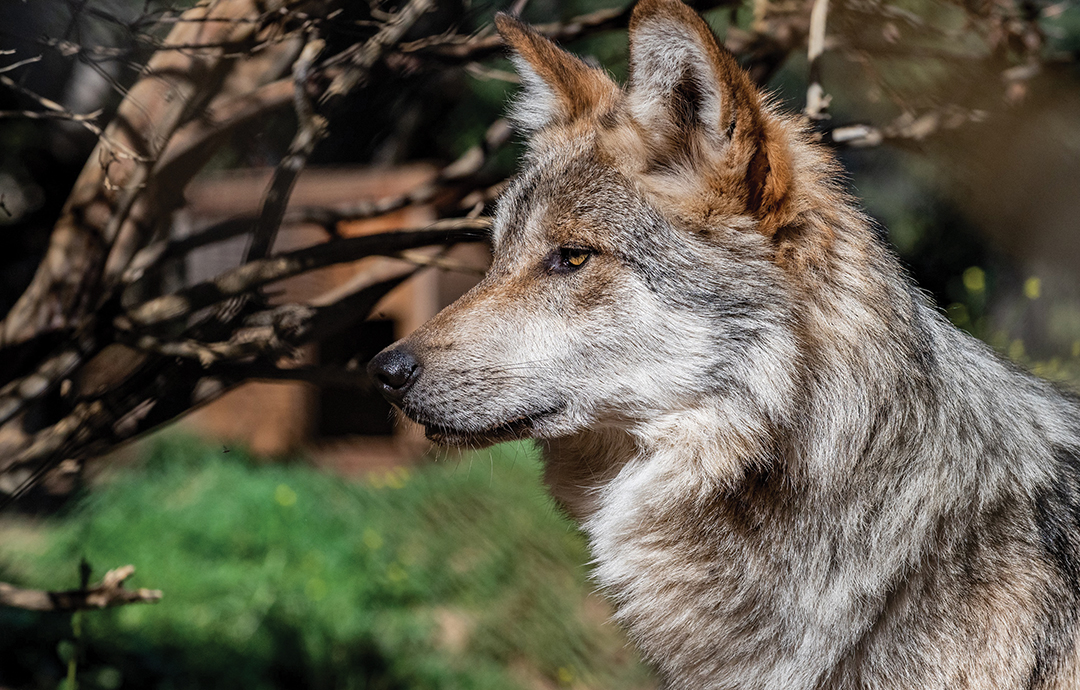
California Wolf Center’s executive director, Christine Barton, is quick to note that no wolves have ever been reintroduced into California through the program, known as AZA SAFE (Association of Zoos and Aquariums Saving Animals from Extinction). Barton says that all of the wolves that make up the ten current packs living in the state arrived through natural dispersal, crossing borders from other states — a reassuring advancement that still faces challenges with regard to territory and establishing ways for wolves and humans to coexist for the benefit of all, as well as the environment.
“That’s part of our big mission at the California Wolf Center,” says Barton. “Just knowing that our apex predators make a huge difference in the ecosystem, and they are important to the landscape.” She notes the positive impact of their health in areas like Yellowstone, where she says bringing them back has improved waterways, growth, and helped manage elk populations. “Everything gets a little bit more balanced when you allow your wildlife to be there,” she says.
Though the AZA SAFE program considers all participating wolves candidates for release, including those residing at California Wolf Center, many have grown beyond breeding age. These animals are then subjects in other programs, including genetic studies that utilize artificial insemination, or they become ambassadors — like California Wolf Center residents Thor and Durango.
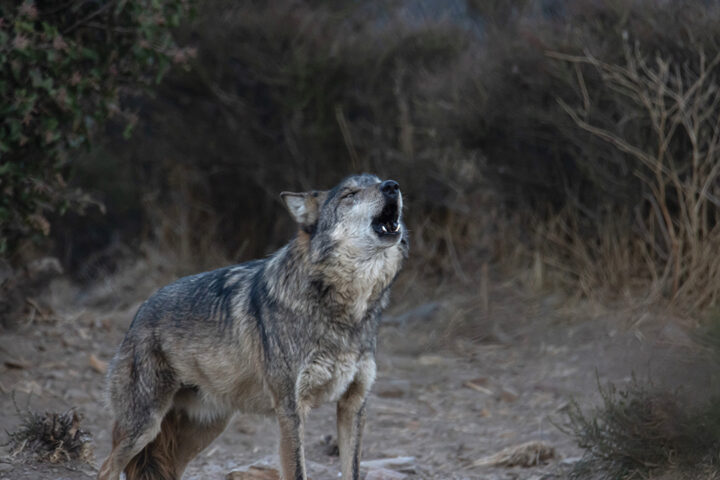

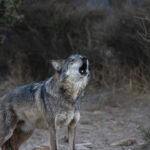

Visitors are welcome at California Wolf Center, where guests, private groups, and schools can book guided tours for the unique opportunity to see these beautiful ambassadors of the species and witness instinctive wolf behaviors up close.
At the center’s annual fundraiser, “Wolves & Wine,” last month, Barton announced a new, $2.5 million capital campaign, “Guardians of the Wild,” created to secure funding for the purchase of a nearby property for a drastic expansion of California Wolf Center that will include a new visitor center, enhanced habitats for the center’s resident wolves, and new enclosures to add other local apex predators including mountain lions, bobcats, and coyotes. The goal, says Barton, is “to expand our impact, elevate our mission, and still focus on coexistence between people and native predators,” and when complete, it will be a place where visitors can “see them, learn about them, appreciate them, and learn to how to coexist with them.” californiawolfcenter.org
ArtReach San Diego
“Art is so important. It’s a joyful story; it’s all adding to lives.”
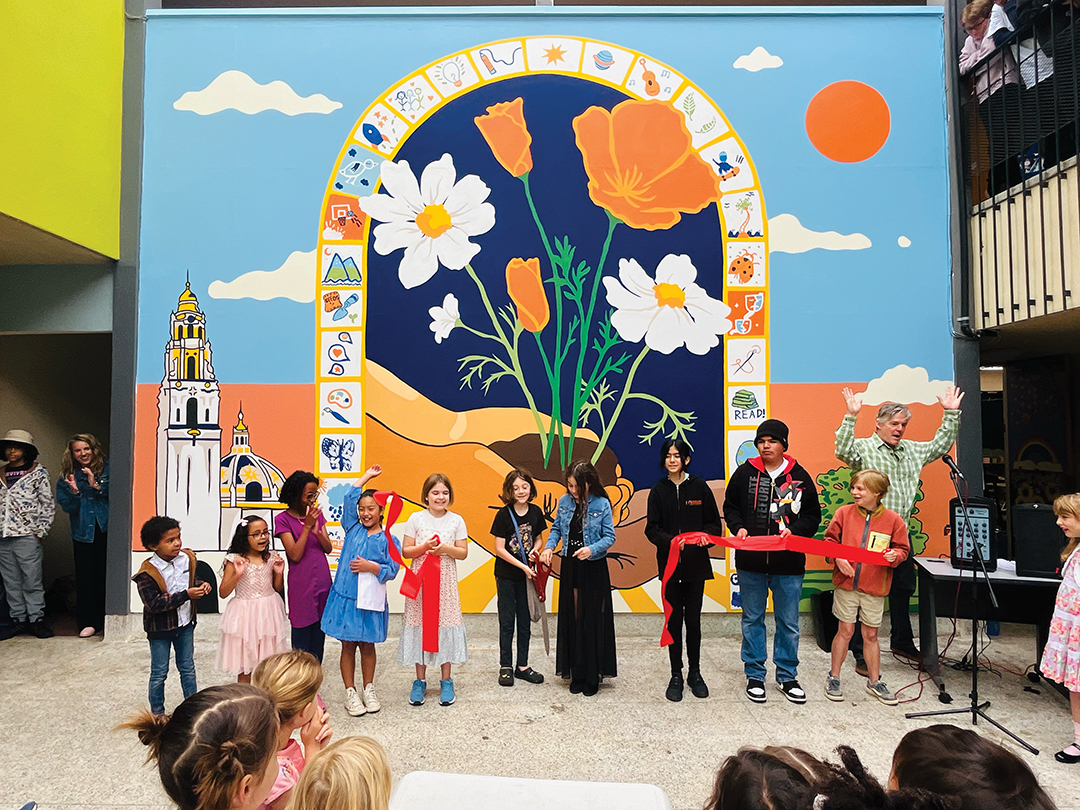
“In 2007, art was pulled from the [public school] curriculum, and we knew kids need art, plain and simple,” says Sarah Holbach, Executive Director at ArtReach San Diego. Though a solution seemed straightforward enough — use existing connections to artists to engage children in a classroom setting to fill that need — it became evident that the role of art in kids’ lives is far greater than any one project or experience. “As we’ve grown, we’ve just seen how art and creativity play a role in the whole life of a child, and the way that you can approach things in art — it’s okay to make a mistake, you learn to try again, work through difficult things, you learn to collaborate — those skills benefit you so much outside of just art,” says Holbach.
Since its first program, a chalk “quilt” project, debuted in 2008 at Garfield Elementary, ArtReach now provides its no-cost art curriculum for K-12 students at 90 sites throughout San Diego, including schools, libraries, and community centers. A mural program was introduced in 2019, when artists were engaged to work with students to transform and beautify their spaces beyond the classroom.
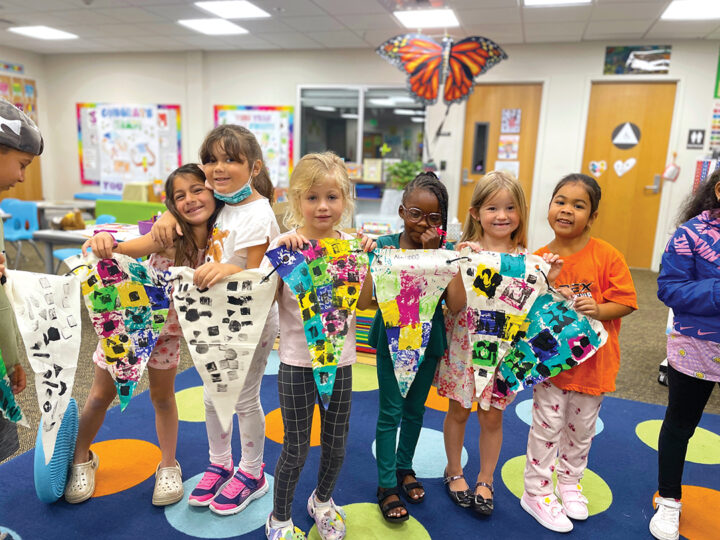
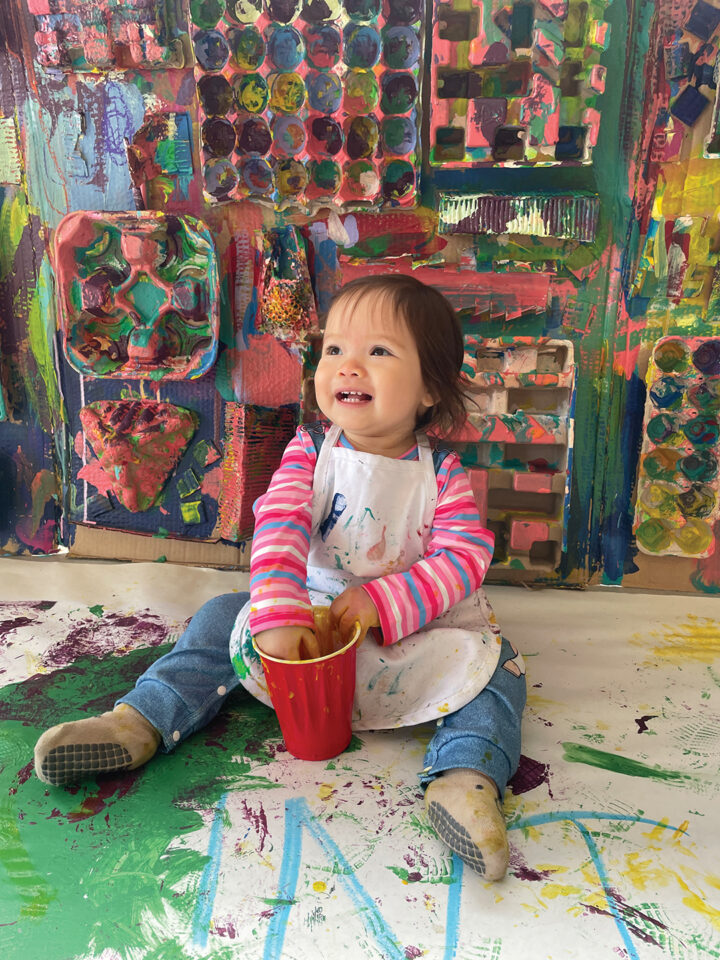

ArtReach’s growth has been mostly organic. “It really is a lot of word of mouth and good reputation and joy that’s carrying us,” says Holbach. Funded by grants, school districts, individual schools, and even parent organizations, the significant demand brought to light an encouraging reality: art, and artists, were in demand. “One of our big goals of why we exist is not just to bring more art to children, but to show that it’s a real career path and a viable career path,” says Holbach. “So, we exist as much for the artistic community and the creative community in San Diego as well.” To this point, Holbach notes that all of ArtReach’s 11 full-time employees are practicing artists, in addition to its muralist partners and the 24 teaching artists that travel throughout the community. This belief in and support of the artistic community also drives ArtReach’s strategic vision in the coming years to grow its paid internship program, offering a pathway for artists to learn within ArtReach and eventually become part of the organization.
A drop-in studio at the ArtReach headquarters in Hillcrest offers additional opportunity for creativity, serving children from early walkers to elementary school age and beyond. Here, says Holbach, “You can get messy. You can fully cover your body in temporary tattoos. You can paint on a giant canvas. And, that space is always changing. There’s enough that keeps it familiar, but it’s always changing a little bit so that it’s a safe and accessible space to have your first creative experiences.” Beginning in 2026, Holbach says ArtReach has secured funding to launch a Saturday workshop for families at its Hillcrest studio, welcoming all ages for intergenerational workshops at no cost to participants.
“Art is so important. It’s a joyful story; it’s all adding to lives,” says Holbach. “The secret sauce to ArtReach, I think, is that it’s not one-size-fits-all, even since our beginning…we’re listening first and then creating a program to fit their needs.” artreachsandiego.org
C4 Foundation
“Our operators are realizing that they need more than just the camaraderie that comes naturally from being in the team.”
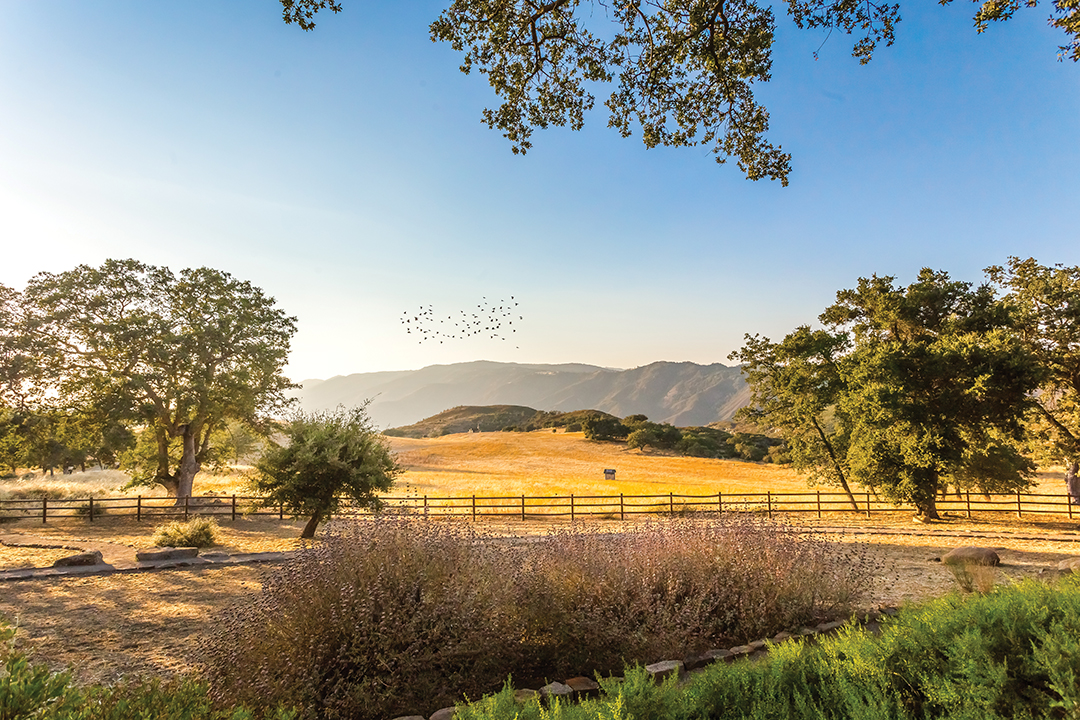
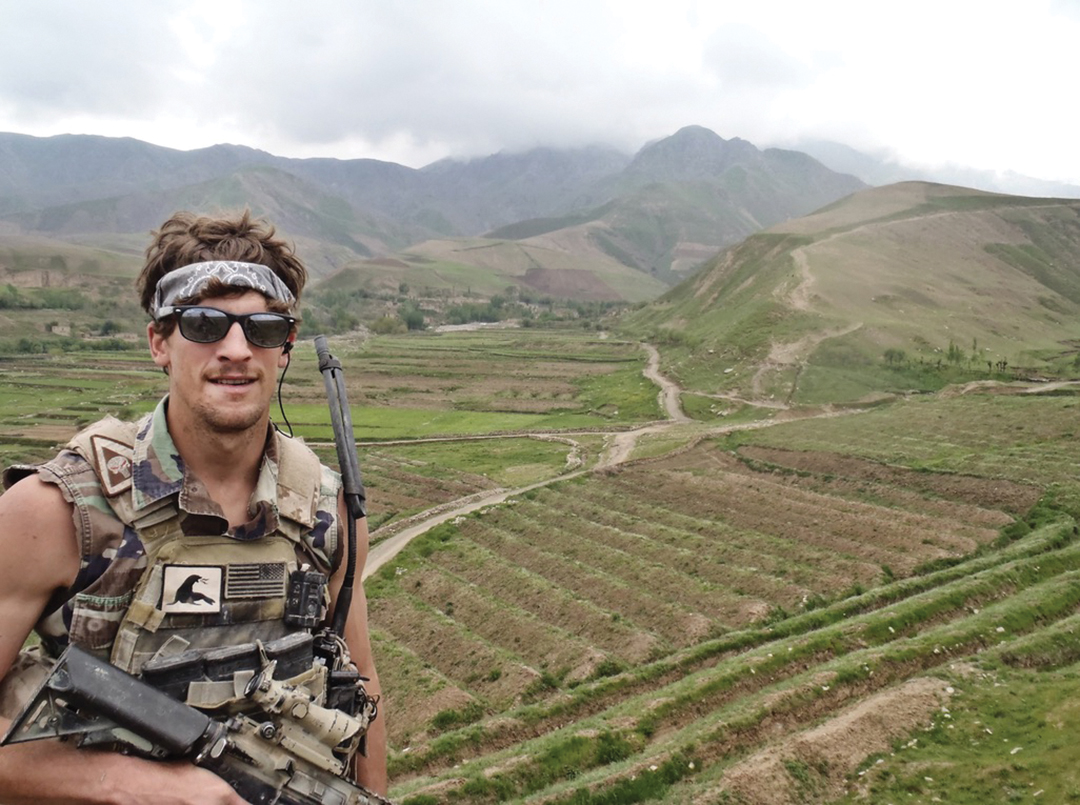
When Charles Keating IV, or C4, would come home from deployment as a Navy SEAL, what his family noticed was that he just wasn’t himself. The joyful spirit that he was known for his entire life was replaced by a desire for solitude, and only after he’d spent time alone, out in nature and away from other people, did he return to being his usual, gregarious self. When C4 was killed in action in May of 2016, his family knew that they wanted his legacy to be related to the healing properties of nature, and the struggle that members of the Navy’s SEAL teams experience in balancing the demands of their work with their personal lives. They created the C4 Foundation to support active-duty SEALs and their families, and when a 560-acre parcel of land in Santa Ysabel became available, about 90 minutes from the Naval Special Warfare Command in Coronado, the C4 Foundation found its home.
“For so many of these guys, it’s like they don’t understand that you can be a great operator and a great husband, a great father,” says Kristen Hayes, C4’s Chief Impact Officer and herself a 20-year SEAL spouse. “It’s not an either/or, and sometimes, by the nature of the job, they think that they can only pick one.”
At the C4 Ranch, which operates with full approval of the Department of Defense, SEALs and their families find a sanctuary where they can be together, decompress, and engage in programs and activities to reinforce their family bonds and strengthen their resilience, at no cost to them. “What the foundation is trying to do is give these guys tools to have a happier home life, which really equals, when they head out on deployment, a more successful deployment, and the ability to stay in longer if you have a family that’s happy and supporting you from home,” says Hayes. “The guys are able to take time for themselves and for their families, and they see that it doesn’t [negatively] affect their ability as an operator. It actually improves it.”
Families can register to take part in a variety of programs, called F.R.O.G. (Families building Resilience through Optimism and Gratitude) Programs, which include mind/body therapies created with experts in behavioral neuroscience combined with other healing methods including meditation, cold plunges, and acupuncture, plus spouse, child, and family workshops and retreats that acknowledge the sacrifices and contributions of not only the SEALs, but the people who support them. Operators and their families can also simply choose to enjoy a family retreat at the ranch, either in a 3-bedroom cabin or in one of two Airstreams on property. Reservations are made via an online booking system, and they can choose dates based on availability and what works for their schedules for a 3-day, 2-night stay.
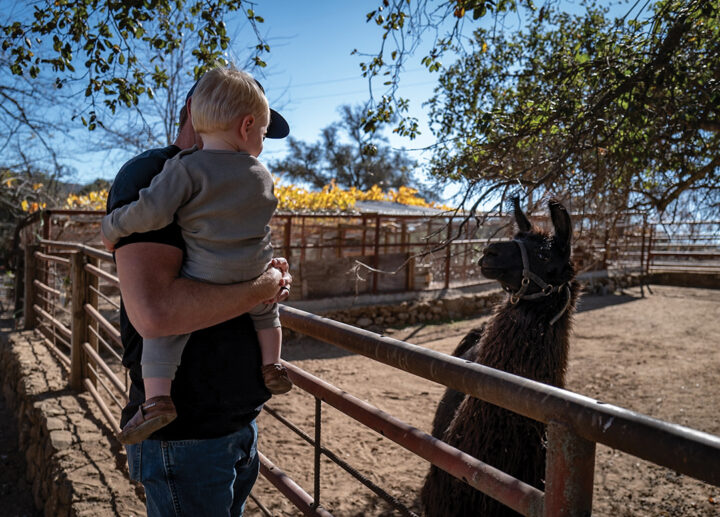
Hayes shared the recent announcement of a $30 million capital campaign to increase the capacity at the ranch, and they’ve recently broken ground on six new bungalows, to be completed by summer 2026. “The bungalows are just one part of phase one,” says Hayes. “What we are really hoping to make is a full wellness — almost like a boutique hotel — experience.” In addition to the bungalows, they are looking to add another cabin, a bunk house to host off-site meetings, retreats, and team-building experiences, and two maker spaces, as well as improve the lakes on property so they can support fishing, paddle-boarding, and swimming.
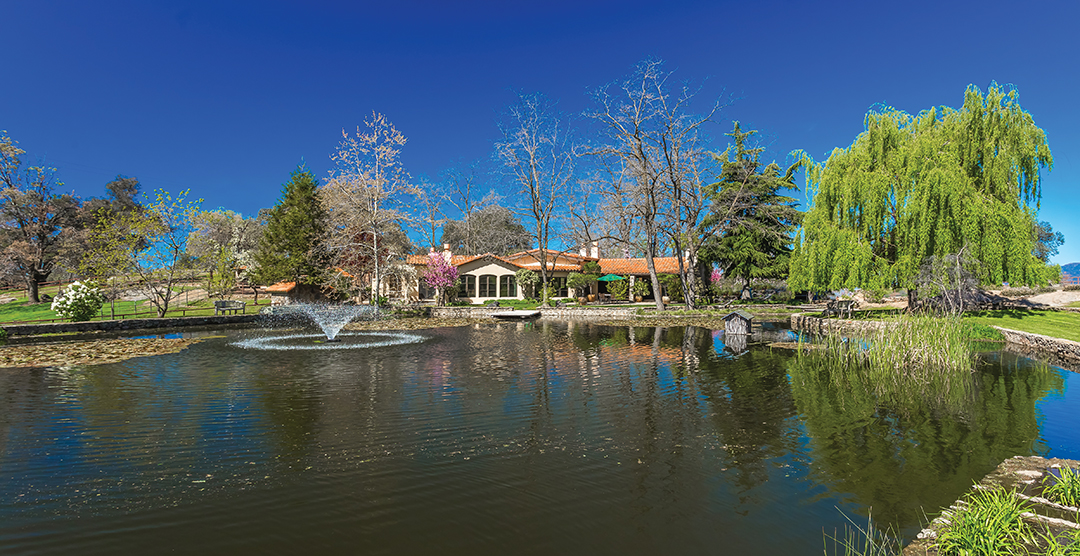
“Our operators are realizing that they need more than just the camaraderie that comes naturally from being in the team,” says Hayes. “They need for their families to come together with other families on our ranch, to spend time together, to create a synergy that doesn’t just happen when they’re working together on the battlefield.” c4foundation.org
Curebound
“You belong with us, and you can be part of the solution and the cure.”
There are multitudes of organizations that exist to financially support cancer research, fund awareness, offer supportive therapies and treatments for patients, and even provide services for caregivers. What’s unique about San Diego-based nonprofit Curebound is that it doesn’t fit into one single box. Yes, it raises and distributes money and functions in the realm of cancer, but it operates within a transparent, goal-oriented, and targeted framework that is both refreshing and incredibly inspiring, known as translational cancer research.
“We are so fortunate in San Diego to have some incredible basic cancer research organizations like the Salk Institute and Sanford Burnham Prebys and La Jolla Institute for Immunology and Scripps Research. If you think about those organizations, they have labs and they have PhD scientists — some of the best in the world — who understand chemistry and biology and what causes cancer and why it’s growing and mutating. But that information alone, if you don’t translate it to a compound that can get into a clinical trial, that can become a medicine, then you really just have a deep understanding of the biology of cancer, not something actionable to target the disease and reverse it or stop it,” says Curebound CEO Anne Marbarger.
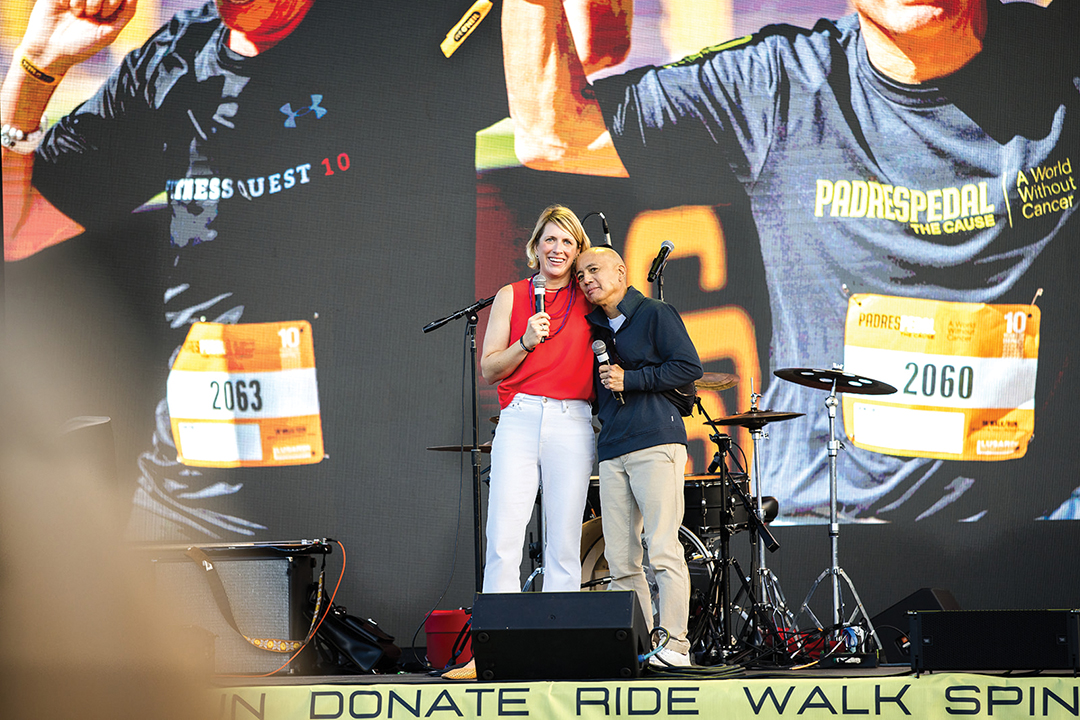
“Translational cancer research really means being able to translate a basic discovery that happens, usually in a lab, around the drivers of cancer, or a mutation, or the cellular pathways that are essentially causing cancer, and being able to translate the discovery of that knowledge to clinic and to patients, where it can become a medicine that overcomes cancer,” Marbarger explains.
Deeply entrenched in the fabric of San Diego, Curebound brings together the talent spread across the many research entities in our backyard, but with the goal of sharing the results with the world. While Marbarger says that this will always function as what she calls the “hub of this ecosystem,” the goal is, of course, to create treatments that can help people worldwide.
Formerly Padres Pedal the Cause, the organization became Curebound in 2021 when it joined forces with the Immunotherapy Foundation. “The word ‘curebound’ really conveys why we’re here,” says Marbarger. “We have always created these mechanisms to bring the best and brightest scientists from very different backgrounds and from different institutions together, and we’ve fostered that by providing seed and grant funding that requires collaboration, and I think that that drives our extensive community engagement,” explains Marbarger. She says that this spirit of collaboration that brings together multiple entities in this shared goal is a platform with broad appeal.
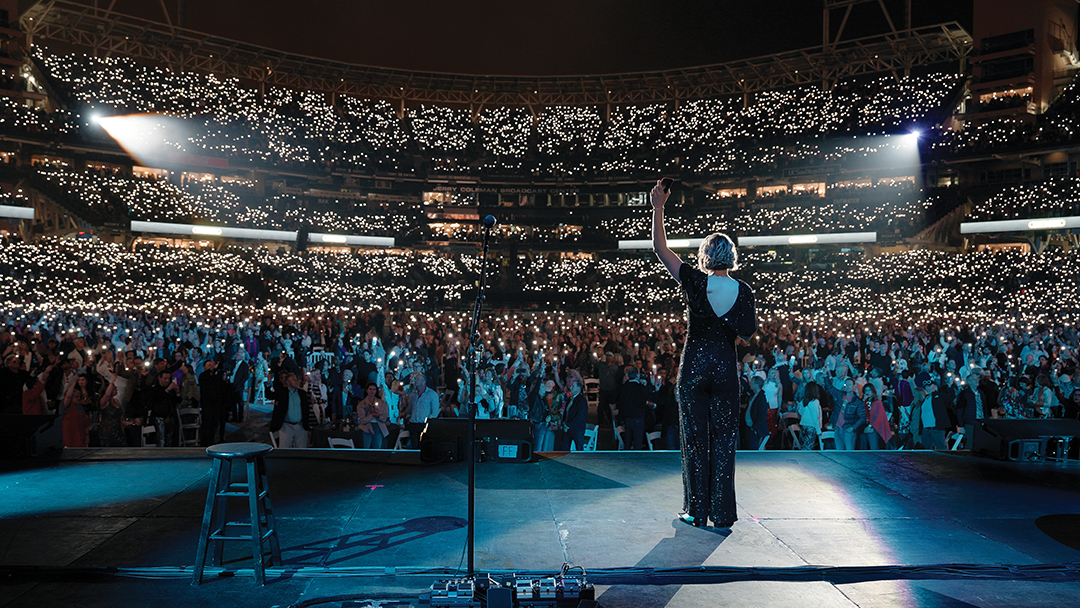
“Everyone is touched by cancer. They want to be part of a community that says, ‘You belong with us, and you can be part of the solution and the cure,’ and that’s what Curebound is all about,” she says.
Marbarger shares her enthusiasm for three projects that have received Cure Prizes — $1 million grants to teams that have an innovation to improve the standard of care for cancers that are typically fatal that have to have patient application in 3 to 5 years: an ovarian cancer project, a liver cancer project, and a pancreatic cancer project. She says that year-to-date, Curebound has received 166 letters of intent, a 32 percent increase over last year. The plan is to invest another $10 million into local cancer research this year. “There’s just such a strong pipeline of innovation and discovery that, without support from the community and from Curebound, won’t get a chance,” she says. “And that’s what absolutely inspires me and the community to give more.” curebound.org


Comments